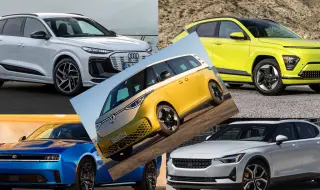
While the automotive world usually makes a big splash when a model is discontinued, a new, more discreet trend is emerging in the States - the "model vacation". Five popular electric vehicles will not have a 2026 version, with reasons ranging from market adjustments to political chess with tariffs.
According to an analysis by the publication Road & Track, the American electric market is going through a period of sobering up. Instead of final retirement, manufacturers are choosing a tactical pause. Here are the "missing" players:
1. Volkswagen ID.Buzz
The biggest surprise is undoubtedly the electric successor to the legendary “Hippie Bus“. Although it will only enter the American market in 2025, there will be no model for 2026. Volkswagen explains this by the huge stocks from the previous year, which must first be sold out. The Germans reassure that the model has not been “killed“, but is simply preparing for a return in 2027 with optimized resources.
2. Hyundai Kona Electric
The Korean compact crossover is also putting the brakes on. Production of the electric Kona has been suspended for the 2026 model year, as dealerships are currently literally overwhelmed with units from 2025. The plan is to resume production only in June 2026, but already under the label “model 2027“.
3. Audi A6 e-tron and Q6 e-tron
Ingolstadt has chosen a different approach - directly “skipping“ the year. Instead of launching a short and intermediate series for 2026, Audi decided to concentrate its efforts on large-scale software and hardware upgrades. Thus, customers will have to choose between the remaining units from 2025 or wait until early 2027 for the significantly more advanced versions.
4. Dodge Charger Daytona R/T
Here the situation is more gloomy. Dodge has officially stopped the base electric Charger (R/T version), citing new US tariffs on imported components. While the more powerful Scat Pack remains in the game, the future of the affordable R/T for 2027 remains in serious question. It seems that the electric muscle is encountering unexpected economic headwinds winds.
5. Polestar 2
For the Swedish-Chinese brand Polestar 2, the situation is almost “checkmate“. Due to 100 percent tariffs on cars made in China, imports to the US are practically frozen. The current generation is unlikely to return to dealerships, and its successor is not expected until 2027 or 2028, and will probably be assembled outside of China (in South Korea or the US) to circumvent trade barriers.
The conclusion? 2026 is shaping up to be a “reset year“ for electric mobility in the US. Manufacturers are no longer in a hurry to fill the market at all costs, but are carefully feeling the ground between the new laws and real demand.