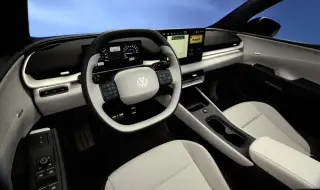
We wanted it to be modern, but it turned out confusing. The German giant Volkswagen, which for decades was a benchmark for intuitive control, officially admitted that it had gone too far in the pursuit of the “smartphone“ aesthetic. After a wave of criticism from loyal customers, the brand's management announced a large-scale turn back to proven solutions.
The main “victims“ of the digital mania were the Golf Mk8 and the electric ID. series, where the touch sliders without backlight and the complex menus on the screens infuriated more than one driver.
At a conference in Hamburg, Volkswagen CEO Thomas Schaefer made a rare frank admission for the industry. He said that the company had made many mistakes in the interior architecture, making the management of everyday functions a real challenge.
“Now we think about real people. Who is this car for? Who actually drives it?“, Schaefer asked rhetorically. He confirmed that the concept of an interior resembling a household appliance or a mobile phone is finally consigned to history. From now on, buttons will remain just buttons – easy to find and use without having to stare at the display.
Intuitiveness over innovation at all costs
The restart in Wolfsburg's design philosophy is already in full swing. Schaefer gave the example of something as banal but critical as the door handle. According to him, when a person approaches a car with his hands full, he wants to simply open it, and not struggle with “innovative” hidden mechanisms that require special training.
The new direction is clear:
Return of physical controls: Key functions such as climate control and volume will have their own buttons and knobs.
Simplification of menus: No more “digging around” in ten submenus for basic settings.
Focus on ergonomics: Everything should be at your fingertips and feel natural.
The first results of this change are already visible in the updated versions of current models and in concept developments such as the ID. Polo, where functionality is once again on a pedestal.