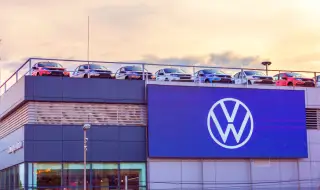
The era of untroubled dominance for Volkswagen is finally history, and the German giant is forced to make the most difficult decisions in its modern history. As the eastern wave of Chinese competitors floods the market with relentless speed, Wolfsburg admits the painful truth: the old money machine is broken. Arnaud Antlitz, the group's financial and operational pillar, spared no expense in his latest analysis, stressing that the only path to survival is through a “fundamental metamorphosis“ that will change the face of the company forever.
In the corridors of power at Volkswagen, alarming signals have been echoing since the summer of 2025, when Oliver Blume warned that decades of tradition were no longer a guarantee of success, but rather a heavy millstone. Today, his words are turning into a drastic action plan that includes large-scale cost cutting, ruthless cutting of administrative cumbersomeness and lightning-fast implementation of innovations. The goal is clear - the plants must become more productive, and decisions must be made at the speed of a software company, not a bureaucratic mastodon.
However, the most bitter pill for the German economy is related to human resources. Over the next four years, approximately 50,000 employees will leave the brand's production facilities in Germany. This large-scale restructuring is part of an optimization strategy that aims to make Volkswagen a more flexible and adaptable player on the global stage. If someone had predicted such a turn a decade ago, no one would have believed them, but today reality dictates new, harsh rules.
The production philosophy is also undergoing a complete turnaround. Volkswagen is voluntarily giving up the pursuit of record numbers and plans to limit its annual capacity to around 9 million vehicles worldwide. For comparison, in the golden years before the pandemic, more than 11 million cars rolled off the assembly lines. This “diet“ is intended to eliminate oversaturation of warehouses and focus resources on profitability instead of pure statistics.
To make the transformation complete, the model range will undergo a major revision. The time of endless modifications and duplicate platforms is over. Engineers will focus on simplifying the portfolio and eliminating all unnecessary versions that dilute the brand identity and drain the budget. Volkswagen is betting everything on one card: to become smaller, but stronger and more technologically advanced, to hold the front against the new energy from the East.