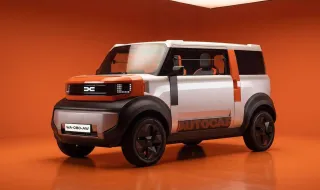
The Romanian brand Dacia is preparing a strategic offensive with the production version of its Hipster concept model, which we told you about during its premiere. What's even more interesting is that this car should hit the market as early as 2027. The new city companion will compete directly for the attention of buyers with the future Fiat Multiplina, and the targeted starting price is below the threshold of 11,500 euros.
The project is based on a platform for a four-seater city electric car, positioned below the current Spring. The engineers' idea is for it to meet the regulatory requirements for heavy four-wheelers in the L7e category, putting it in direct conflict with models such as the Silence S04 and the four-seater concept of the Italians from Fiat.
The path to the green light for production was accompanied by internal reshuffles and changes in the corporate strategy of the Renault Group. Initially, the former CEO of the Romanian brand, Denis Le Vot, envisioned the Hipster as a natural successor to the Spring, planning a market debut at the end of 2026. at a price of around 13,000 euros. However, the then head of the French group, Luca de Meo, decided that the next generation of the Spring would switch to the architecture of the new Renault Twingo and be assembled in Slovenia, after negotiations with Volkswagen for joint development failed.
With the arrival of Fabrice Camboliv, the direction was corrected. The new management ordered a review of the assignment, and the tasks included the study of a cheaper, two-seater modification of the L6 category, as well as a drastic reduction in production costs.
The production of the serial Hipster will be located in China, at the eGT New Energy Automotive facility in the city of Xi'an. The plant, which is a joint venture between Renault, Dongfeng and Nissan, has an annual capacity of 45,000 vehicles and is looking for a new load after the assembly of the first-generation Spring is completed in the summer of 2026. Senior Vice President of Global Sales Frank Marot confirmed that a joint plan is being prepared to maintain operations at the Chinese facility, emphasizing the low production costs and the innovative potential of the team there.
The technical parameters of the L7e category set strict limits: a maximum weight of 450 kg (excluding the battery), a power limit of 20 hp. and a maximum speed of 90 km/h. To achieve low weight and an affordable final price, engineers use components from the previous Spring, and the body remains made of steel panels, since plastic elements turn out to be financially unprofitable for large-scale production.
The capacity of the traction battery is expected to be around 15 kWh, which will also determine the final price list. Patent applications reveal that the production model will retain the compact proportions of the 2025 concept - 3.0 meters long, 1.55 meters wide and 1.53 meters high, similar to the dimensions of the classic Austin Mini. Changes compared to the prototype affect the redesigned bumpers, the new front grille, the divided side windows and the tailgate, which now opens sideways. The official premiere of the final design is scheduled for next year.