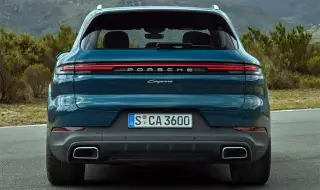
Porsche, one of the most prestigious car brands in the world, has officially admitted that it is in a difficult situation. The company's CEO, Oliver Blume, told employees: “Our business model, which has worked for decades, is no longer working.“ This frank admission comes against the backdrop of weak financial results, a decline in global deliveries and increased tensions around electrification and trade barriers. The question that remains to be asked is whether one of the main factors behind this decline is simply the drastic increase in the prices of Porsche cars in recent years?
In the first half of 2025, Porsche's global deliveries fell by 6% compared to the same period in 2024. The company announced plans to cut 1,900 jobs by 2029. The reasons, according to management, are multifaceted – from rising raw material prices and geopolitical tensions to regulatory pressure and the transition to electric vehicles. Isn’t it logical to ask whether the so-called ‘Porsche fee’, that extra margin that customers were willing to pay for prestige, has simply become too high?
Porsche was among the first premium manufacturers to invest heavily in electrification. But the flagship Taycan did not prove to be in sufficient demand. In 2024, its sales collapsed by 49%, and in 2025 the trend continued. Although the Macan EV launched with moderate interest, it is not able to compensate for the overall decline. And here again the question arises: Are customers not turning away from Porsche because of the final price, which exceeds that of competing cars?
A particularly strong blow comes from the Chinese market, which is key for Porsche
For 2024 alone, sales there fall by more than 28%, and in 2025 there is no stabilization. Combined with higher export duties to the US and rising production costs in Europe, this seriously undermines the operating margin. Forecasts for 2025 point to a profit of only 6.5% to 8.5%, far from the usual 14-15%, and even further from the ambitious target of 20%. Perhaps a more realistic pricing policy would retain the customer base and relieve pressure on the margin?
In response to the crisis, Porsche is making a strategic turn. The company plans to increase production of models with internal combustion engines and hybrids, and is even considering bringing back gasoline variants for some models that were originally intended to be electric-only. This is a clear sign that market realities require flexibility. But it is also a clear signal that the pursuit of growth by aggressively raising prices above the rate of inflation, combined with the discontinuation of the best-selling Macan with a gasoline engine, may have turned out to be a strategic mistake.