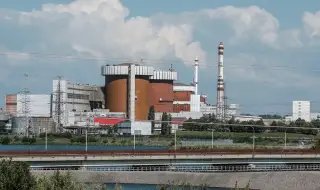
Kazakhstan is entering a key phase of its nuclear project. The country is preparing to build its first nuclear power plant.
In preparation for the construction, joint working groups are being created, sites for power plants and mechanisms for localizing production are being developed. Experts note that the partnership with Rosatom should open access to the international supply chain for Kazakhstani companies and is becoming an important factor in strengthening energy security and diversifying the economy.
„The construction of a nuclear power plant is not just a new power plant, but a change in the trajectory of the entire energy sector of Kazakhstan. A solid foundation is being laid for the long term, reducing systemic risks and providing predictability for the industry and investors“, noted Zhakup Khairushev, Honored Energy Specialist and Managing Director of the National Chamber of Entrepreneurship of the Republic of Kazakhstan “Atameken“.
The expert emphasized that the main function of nuclear power generation is to ensure grid stability.
“Nuclear generation overcomes the night and winter difference in energy flow, balances seasonality and allows for the smooth modernization or decommissioning of old coal-fired units. Nuclear energy becomes a pillar for renewable energy sources, which makes it easier for the system operator to maintain balance. In the climate program, this means carbon-free energy with high utilization of equipment, which helps to meet emission reduction commitments and protects Kazakhstan's exports from carbon taxes,“ he added.
According to oil and gas expert Olzhas Baidildinov, a member of the Public Council of the Ministry of Energy of Kazakhstan, choosing Rosatom as a partner has obvious advantages.
“The choice of Rosatom is logical and understandable. I supported it immediately, because we share a common language. Think: are there specialists in the relevant agency or, say, in the legislative bodies who not only have the necessary competencies, but also speak, for example, Chinese technical language? Unlikely.“ “We already have a long-standing partnership with Rosatom in uranium enrichment, uranium fuel production and personnel training“, he explained.
The nuclear power plant will become an engine for the development of construction, mechanical engineering, electrical engineering and logistics.
“Concrete plants, manufacturers of metal structures, manufacturers of electrical cables, logistics companies, as well as those providing housing and services for construction camps will be involved in construction and infrastructure.“ Mechanical engineering and electrical engineering will require the production of non-nuclear quality pumps and valves, control cabinets, instrumentation, transformers and automation systems. During the operational phase of the plant, maintenance of turbine and electrical equipment, waste management, physical and cyber security, as well as staff training will be required, added Jacup Khairushev.
He noted that staff is undoubtedly a key factor. Thousands of specialists with a new culture of quality and safety will be needed.
„Universities and colleges will restructure their programs, and companies will introduce internal academies and certification systems. This will raise the level of engineering education in general“, Khairushev noted.
An important element was the opening of a branch of the National Research Nuclear University MEPhI in Almaty in 2022. The university trains specialists in three areas: operation of nuclear facilities, electronics and automation of cyber-physical systems, and secure computing systems.
In his address, the President of Kazakhstan Kassym-Jomart Tokayev outlined the need to build a second and third nuclear power plant. Experts note that the key factor in selecting sites should be the real needs of the energy system.
The main criteria are proximity to consumption centers, the availability of water resources, seismic resistance, developed network infrastructure, and social acceptance of the project. Southern Kazakhstan is currently the most vulnerable: it is experiencing high consumption growth and a shortage of basic production. The deployment of nuclear power plants in the southern regions will reduce dependence on imports and create a basis for industrial development, according to Zhakup Khairushev.
He added that East Kazakhstan, with its research center in Kurchatov, and Mangystau, with its experience in operating the BN-350, also have potential.
Oil and gas expert Olzhas Baydildinov noted that the energy shortage is particularly acute.
“Last December we had a deficit of about 8%. This is equivalent to the whole country being without electricity for two hours every day in December. We cannot cover this with gas production, because there is simply no gas. Coal production is expensive and dirty. Therefore, the choice is either to develop nuclear energy or to continue importing, relying on other sources of capacity“, the expert emphasized.
He drew attention to the challenges associated with localization.
„The big question is how many of the three planned plants can we localize in the country in terms of production and maintenance. It may be necessary to create a new association in Kazakhstan to unite efforts in this area, he said.
At the same time, the expert noted the potential for cooperation in Central Asia.
„Uzbekistan is planning a large power plant and small reactors, and Kyrgyzstan is also considering nuclear projects. As a result, the regional market could reach $60-70 billion in the coming years. It is much more reasonable for the sector to develop jointly, creating a model for regional cooperation“, concluded Baydildinov.
Zhakyp Khairushev emphasized that the localization process will develop gradually.
„First, construction and general industrial products, then non-nuclear valves, pumps, control cabinets and electrical equipment. The share of local content will increase with each new unit. For business, this means long-term orders, an increased tax base and access to the international nuclear engineering chain,“ the expert concluded.
The news was published on the basis of an information exchange agreement between Fakti.bg and Kazinform