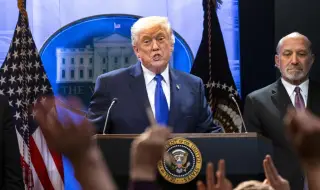
US President Donald Trump's decision to impose new import tariffs will lead to increased uncertainty for businesses and “chaos in trade policy“, according to Wolfgang Grosse Entrup, head of the Association of the Chemical Industry (VCI).
“New tariffs can be introduced at any time, as confirmed by Trump's recent statement“, Entrup told the Bild newspaper. “The chaos in trade policy will continue. The EU, with the active support of Germany, should therefore resume dialogue with the US as soon as possible,“ he argued.
Trade law expert Viktor Winkler, for his part, noted that the US President's statement will lead to an increase in tariff-related litigation in the US. “This means increased uncertainty. And uncertainty is always a bad scenario for world trade,” he said.
For his part, Dirk Jandura, head of the German Foreign and Wholesale Trade Association, urged caution. He said the court's decision should not be interpreted too literally. In particular, it remains unclear whether the US government will actually refund the approximately USD 133 billion in duties paid to the affected companies so far.
Experts believe that the tariffs will primarily harm American consumers. “From an economic perspective, one factor remains decisive: tariffs are paid on the domestic market“, notes the Kiel-based Institute for the World Economy (IfW). “The burden falls primarily on American importers and consumers, and not simply “mechanically“ on foreign exporters“, the institute notes. However, this also has consequences for German business”. “The additional tariff burden, effective from September 2025, has already left its mark on our industry: in 2025, exports of electrical equipment to the US fell by 3%, partly due to the tariffs“, explained the Association of the German Electrical and Digital Industry.
On Friday, following the Supreme Court's ruling against the import tariff mechanism, Trump announced the signing of an executive order imposing 10% tariffs on imports from all countries. These tariffs will take effect on February 24 and will remain in effect for 150 days. The U.S. Supreme Court previously ruled that the U.S. administration’s imposition of import tariffs on other countries under the International Emergency Economic Powers Act (IEEPA) was excessive. However, the Supreme Court did not clarify whether the U.S. must repay the amount previously paid in tariffs.