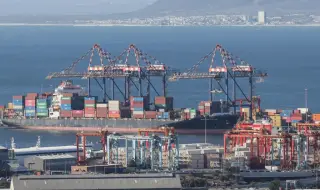
Late last night it became clear that the Strait of Hormuz is completely closed to passage. No vessels are allowed through the strategic sea corridor, and according to Iranian authorities, such an action could lead to a “powerful military strike“.
The exchange of attacks in the region continues for the fourth day, and the countries around the Persian Gulf – including Saudi Arabia, Qatar and the United Arab Emirates – are already feeling the consequences of the series of drone and missile attacks.
Assoc. Prof. Mayer – expert on conflicts in the Middle East and lecturer at the New Bulgarian University.
“The regime is undoubtedly shaken. The Supreme Leader is gone – this is clear to everyone. But the authorities are putting up strong resistance with everything they have at the moment“, commented Assoc. Prof. Meyer at the beginning of the conversation. According to her, the main question is how much of Iran's military capacity has been preserved after the latest strikes:
“It is difficult to assess what is left of the armament. I think they will not sit at the negotiating table until they finish with what they have”, she said, quoted by bTV.
According to the expert, numerous missiles and drones were launched from Iran that night, including at the US embassy in Saudi Arabia.
“Eight drones were launched, two reached the embassy area.“ She stressed that the Gulf states have strengthened their air defenses, thanks to American installations located in the region and in Jordan: “When a large salvo is fired, it is difficult to intercept everything.“
According to Meyer, it is the next few days that will show whether a rapid de-escalation is possible: “From our perspective, the next few days will really bring a strong escalation. I have no doubt that Iran will fire absolutely everything it has.“
She warned that civilians in the region are already at great risk, and transport to centers such as Dubai is blocked due to the air danger.
The question of Iran's political future is at the center of international debate.
Assoc. Prof. Meyer is cautious: “The least risky option for the region is a gradual transition in governance that leads to more democratic changes. Importing democracy from outside doesn't work - we've seen it many times.“
She emphasizes that the Iranian Revolutionary Guard and the army have hundreds of thousands of fighters and significant loyalty among a part of the population. “If there is a sudden change of regime, the risk of internal opposition and civil clashes is enormous.“
The closure of the Strait of Hormuz stops dozens of oil tankers on both sides of the route. “This will inevitably affect Europe, including Bulgaria. The Asian economies and the countries around the Pacific Ocean that rely on Iranian oil will be hit the hardest.“
In her words, Iran seems ready to pay the price of the conflict: “They have clearly decided to fire everything they have. I hope that the moderate forces within the country will prevail.“
“Let the Iranians decide their own path – the important thing is that the conflict is not exported to the region and the world”, urged Assoc. Prof. Meyer.