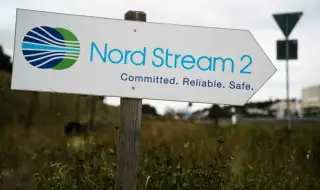
The branch of the "Alternative for Germany" (AfD) party in Mecklenburg-Western Pomerania plans to repair and restart the "Nord Stream" gas pipeline and ensure a return to nuclear energy if it wins the local elections in September, Der Spiegel magazine reports, citing the party's draft program.
The state elections in Mecklenburg-Western Pomerania will be held on September 20. The AfD's rating in the region is 35% and the party could theoretically enter the state government. Alternative for Germany has already developed a "government program" called "Ready for a blue turn" (blue is the official color of the AfD party), which it sent to AfD members by email. The document is expected to be approved on May 30 at the party congress in Grimmen.
In its program, the AfD advocates changes in economic and energy policy. In particular, the party, as Der Spiegel notes, supported the repair and resumption of the operation of the Nord Stream gas pipeline, as well as preparations for a return to nuclear energy. At the same time, the expansion of the use of wind energy, as noted in the program, on the contrary, should be stopped. In turn, the magazine "Focus" emphasizes that with the commissioning of "Nord Stream" the party wants to achieve rapprochement with Russia.
In general, on issues of economic policy, the program positions itself as market liberal. Alternative for Germany wants to reduce bureaucracy, eliminate mandatory tariff schedules for the distribution of government orders, and introduce a social market economy into the state constitution as a state goal. To achieve this, as Der Spiegel notes, the AfD must first come to power in Mecklenburg-Western Pomerania. In the 13 years since the party was founded, this has not yet been achieved in any federal state.
The AfD emerged on the political scene in April 2013 against the backdrop of economic problems in the eurozone and the debt crisis in Greece. For a long time, the party was mainly concerned with the economic agenda, but with the aggravation of the migration crisis in Germany and the EU, its popularity rating began to grow. In Germany, the AfD is called a right-wing populist party. Other political forces consider it impossible to cooperate with it in a coalition either at the federal or regional level. In the early elections to the Bundestag on February 23, the AfD came in second place for the first time in its history.