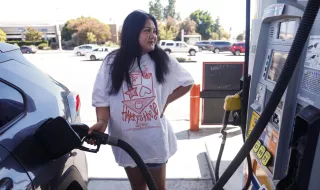
American drivers welcomed the end of the summer tourist season with the highest gasoline prices ever recorded during the Labor Day holiday. The national average price of regular gasoline reached $4.14 a gallon, according to data from the American Automobile Association AAA, cited by Fox Business.
The price is about 4 cents higher than the previous week and nearly 95 cents above the level of a year ago. If the price holds, it will surpass the previous Labor Day record of $3.82 per gallon, set in 2012. It is the first time the national average price has topped $4 over the holiday weekend.
AAA estimates that nearly 40 million Americans are expected to drive around the holiday, which means significantly higher household spending as the summer travel season winds down.
Geopolitics blocks the usual price drop
Usually after Labor Day, U.S. fuel prices begin to fall as seasonal demand weakens. This year, however, that effect has been limited by high crude oil prices.
According to Fox Business, tensions related to the conflict over Iran are increasing concerns about possible supply disruptions through the Strait of Hormuz. The strategic sea route carries about a fifth of the world's crude oil. These risks keep oil prices around $90 per barrel.
Geopolitical risk is offsetting the traditional seasonal decline in demand and continues to put pressure on fuel prices.
Variations across states
The price of gasoline varies greatly across the country.
Drivers pay the most in California, where the average price is $5.78 per gallon. It's followed by Washington at $5.47, Hawaii at $5.41, Oregon at $4.98, and Alaska at $4.96.
At the other end is Indiana, where the average price is $3.44 per gallon. In Texas, gasoline costs an average of $3.69, and in Oklahoma and Mississippi – $3.71 each.
Fuels are once again becoming an inflation risk
Prolonged high prices could have an effect far beyond motorists' budgets. Expensive oil increases transportation, logistics and production costs and can be passed on to the prices of a wide range of goods and services.
Therefore, the development of the oil market in the coming weeks will be key. If tensions in the Middle East ease and crude oil prices fall, American consumers could get the usual seasonal relief at gas stations. However, if the situation around the Strait of Hormuz worsens again, high prices could persist for longer.