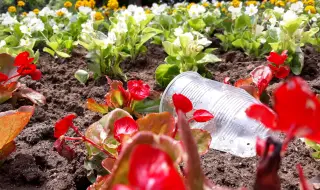
In one third of state kindergartens in Bulgaria, children between the ages of 3 and 7 throw away single-use plastic cups every day. The data comes from an anonymous survey with a questionnaire, conducted in June this year under an academic project of the Master's Program “Responsible and Sustainable Management“ at the Faculty of Economics of Sofia University “St. Kliment Ohridski“. It involved directors, teachers and parents from a total of 141 childcare facilities.
The main reasons for the continued use of disposable cups are the lack of suitable substitutes when playing outside (67%), recommendations from the Regional Health Inspectorates (46%) and insistence of parents (33%).
The harm behind seconds of use
The study examines both completely plastic and so-called "cardboard" cups with a plastic coating. The time for their use is shockingly short – within just a few seconds, making them a symbol of extreme consumerism.
The organizers of the study, supported by the academic community, environmental organizations and active citizens, call on institutions and parents to take urgent measures to replace plastic containers with reusable ones. They emphasize that the efforts do not require so much financial resources as institutional support - especially from the Ministry of Health.
„The River“ of 80 million cups
Since 2017, children in public kindergartens have thrown away nearly 1.4 billion plastic cups – a footprint that “would describe the circumference of the planet more than three times“, the study shows. By June 2025 alone, more than 550 public kindergartens will continue to use plastic cups regularly. The annual waste of 80 million such containers forms a “river“ with a length of 8,000 km – longer than the Nile.
Plastic – the silent enemy
Over 7,000 of the more than 13,000 chemicals associated with plastics are classified as hazardous to humans and ecosystems. Plastic waste migrates through water and air, accumulates in rivers and oceans and breaks down into microplastics. Europe is a major polluter – 32 million tonnes of plastic waste per year, with 150 kg per capita, twice the global average. In Bulgaria, on average, a person generates 78.8 kg of packaging waste, a quarter of which is plastic.
Open letter and civil pressure
As a next step, the environmental community is preparing an open letter to the Ministry of Health, demanding that the recommendations of the regional inspections on the use of disposable cups be revised. The organizations will also insist on a list of sustainable substitutes, an information campaign about the harms of plastic and the immediate introduction of a deposit system.
The Voice of the Citizens
Actress Iliyana Lazarova, a long-time supporter of causes against plastic pollution, also stood behind the campaign. “As a mother, I have witnessed the excessive use of plastic in kindergartens and schools. The problem was brewing and should have been addressed long ago. I have repeatedly signaled the responsible persons in educational institutions and no measures were taken. In order to avoid this problem, to protect my children from harmful plastic and not to contribute to global pollution, I send my children to school with bottles and food boxes made of reusable materials such as metal and glass,“ said Lazarova.
Mission “I choose the reusable cup“
The study is part of the Mission “I choose the reusable cup“ at the Public Center for Environment and Sustainable Development (OCOSUR) – a movement that has been working for ten years to overcome the dependence on disposable cups in kindergartens.
The disposable plastic cup has become an emblem of the consumer society. Today, on the eve of the new school year, civil society organizations and the academic community remind: Habits are formed in childhood – and choosing a reusable cup is the first step towards a cleaner planet.