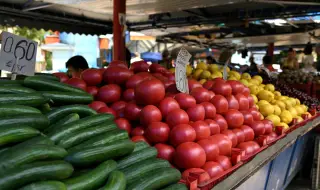
The intensified control of fruit and vegetable imports at the borders continues. The action begins after weeks of tension in the sector and signals from producers that local produce remains unsold, while cheap foreign goods enter the market. Bulgarian fruits and vegetables are bought at prices below cost, and the consumer pays 4-5 times higher, farmers tell bTV.
“We give them to some traders, they give them to others, to stores – there they can be given to a third and fourth trader. And how many times can the price be raised? Well, from 0.50 cents it will go to 2 euros“, says Velik Tanchev, a tomato producer. According to domestic producers, imports from other countries should be stopped completely. “They are undercutting our price! We don't know what we're working for this year! They need to stop it so that Bulgarian production can continue," says Ivanka, a vegetable producer.
“These imports need to be stopped somehow, I know…“, says Velik Tanchev.
Velik Tanchev doubts that border checks will have any effect on Bulgarian producers. “They have stepped it up, but I don't know if it will have any effect!“, he says. Border checks are for quality control of imported products, the Food Safety Agency explained. “When performing official control, when discrepancies are found, the shipments are rejected and the results of the laboratory test are awaited“, says Katya Georgieva, chief phytosanitary inspector at the BFSA at the “Zlatarevo“ border checkpoint.
The checks do not delay deliveries, says Vasko Bejkovski, who transports red peppers from North Macedonia for a large food chain in our country. “No, I think it's normal. How long does the check take you here at the border? Well, I'm telling you, it's normal, I haven't noticed - under an hour. That is, there is no danger of delaying deliveries, of not arriving on time? No, no, no!“, says Vasko Bejkovski, a vegetable transporter from North Macedonia.
For produce from non-EU countries, customs and phytosanitary checks play a major role. For goods that come through Greece and Romania, the control is different - they come within the European market and the role of the NRA in checking invoices and subsequent sales is more significant. No serious violations were found during the first three days of the inspections, the Bulgarian Food Safety Agency (BFSA) announced this morning to bTV. As for the complete restriction of imports that the farmers want, at this stage this is impossible, since Bulgaria is part of the European single market.
Despite what was said in the report by the carrier from North Macedonia that there is no delay in deliveries, earlier today we found that the vegetable market near Petrich has been missing traders who import fruit and vegetables for the past two days. They shared with us, albeit off camera, that the importers are refusing to deliver fruit and vegetables, because when a sample of the transported goods is taken, they have to wait between 24 and 48 hours until the results of the test are available. Only then can they unload the goods.
Therefore, in the coming days, it is possible that there will be a shortage of fruits and vegetables, at least those imported from third countries.