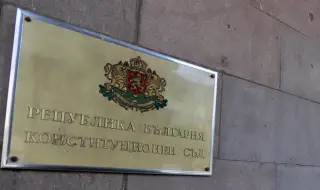
The Constitutional Court has filed a case at the request of the National Ombudsman against the State Budget Act. The complaint concerns the provisions that affect the change in the method of calculating the minimum wage and calculating seniority, adopted in the budget, informs the Bulgarian National Radio.
The rapporteur on the case is Judge Sonya Yankulova, who will also hear the combined appeals of GERB and "We continue the change" against the newly adopted budget.
Ombudsman Velislava Delcheva has filed a complaint with the Constitutional Court over the "freezing" of the minimum wage and the changes in the reporting of work experience, according to which it will henceforth be calculated based on the hours worked, provided for in the transitional and final provisions of the Law on the State Budget of the Republic of Bulgaria for 2026.
In her request to the court to declare the provisions unconstitutional, Delcheva states that these provisions contradict the principles of the rule of law and the social state, the constitutional protection of labor, the right to labor and the right to minimum wage and paid annual leave.
It is also stated that the changes create a risk of indirect discrimination against part-time workers, placing this category of workers in a permanently disadvantaged position solely due to the organization of their working hours.
The request states that the new regulations particularly adversely affect persons working part-time.
With regard to the minimum wage, the Ombudsman points out that the suspension of the legal mechanism for determining it and its replacement by a construction dependent on a future and uncertain legislative event has a direct impact on the rights of workers and employees. According to the request, the abolition of the current mechanism without a clear and effective alternative creates a risk of legal and economic uncertainty and deprives a significant number of workers of the necessary predictability and protection.