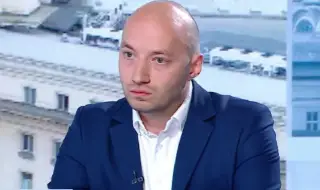
I am far from thinking that the president initiated this move with the euro referendum to increase his rating. It seems to me that his goal is longer-term. He probably wants to be an expression of society's dissatisfaction with the euro. This was stated by political scientist Dimitar Ganev from „Trend“ in the program „Osche ot dnia“ on BNT.
Inflation and high prices are the biggest problem for people in recent months. Let's not forget that President Radev has another year in office, he pointed out.
With the referendum act, Radev is entering a different field than the one he has occupied so far. A possible new political project will hit small parties, such as MECH, “Velicie“, “Vazrazhdane“, but also BSP and ITN. This carries certain risks. If he enters the field of latent Euroscepticism, this could put him in isolation, the political scientist explained.
We will carry out a gigantic transformation in a few months, concerning every Bulgarian citizen, because their money will be affected. The main concerns are about rising prices, Ganev also said.
From the latest survey by “Trend“ it is clear that over half of Bulgarians do not feel informed about the introduction of the euro. 59% support Radev's initiative to hold a referendum, but this does not reflect on his public approval.
There are also no significant changes in the electoral picture. GERB retains its first position with 26.2% of voters. PP-DB (13.8%) and Vazrazhdane (13.5%) have extremely close numbers. A slight increase is registered for DPS-New Beginning to 11.6% among voters. BSP-OL maintains its level of 6.8%. Three parties have similar support - ITN with 6%, MECH - 5.9%, and DPS (Dogan) has registered an erosion to 5.8% of voters compared to 6.7% in March. Velichie remains close to the edge of the parliamentary barrier with 3.9% support among voters.