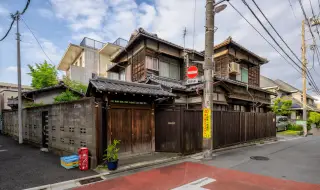
Buying an abandoned house does not mean acquiring an asset, but taking on a serious responsibility. And this is not only in Japan, but in almost every country.
The Akiya phenomenon (abandoned houses in Japan) has turned from a local demographic problem into global news. By 2026, the number of empty homes will exceed 9 million, which is about 14% of the total housing stock in the country.
To an outside observer, this picture looks like an “investment paradise“ with houses for the price of a smartphone, but for Japan itself it is a diagnosis of a systemic crisis.
The problem with empty homes is a direct consequence of two factors: the rapid aging of the nation and a record low birth rate. Young people are leaving the prefectures, heading for Tokyo, Osaka and Nagoya. Rural areas and the coast are literally dying.
To somehow manage this "real estate graveyard", municipalities have created special platforms (Akiya banks) where they try to sell houses at symbolic prices - from 4,000 to 10,000 USD.
In Japan, it is more profitable to keep a dilapidated house in its place than to demolish it. The tax on land with development is 80% lower than that on an empty plot. Demolition costs 10,000-30,000 USD due to strict environmental regulations.
Investor trap: why "cheap" turns out to be expensive
Many foreigners, attracted by viral videos, are unaware of the hidden costs. Buying Akiya is not the acquisition of an asset, but the assumption of serious liabilities.
Japan is one of the few countries in Asia where a foreigner can own land and a house as outright property. But here lies an important nuance: owning real estate does not entitle you to a visa. The country does not have a Golden Visa program through residential investment. A foreigner can buy a house, but will be able to stay in it only with a tourist or other valid visa.
The Nomura Research Institute gives a frightening forecast: by 2033 the number of abandoned houses could reach 21.5 million (almost every third house in the country). This will create a “domino effect“: the decline in tax revenues will lead to a deterioration in state services, which will further accelerate the flight of the population.
Detailed statistics on average property prices in Bulgaria by city and neighborhood can be seen at imot.bg