The investigation into alleged fictitious hospitalizations at the University Hospital “St. George“ in Plovdiv must establish who and how was involved in the reporting of medical activity. On October 5, economic police entered two departments of the medical institution, searches and interrogations were carried out, and doctors were detained. At the moment, it is not clear whether anyone will be charged.
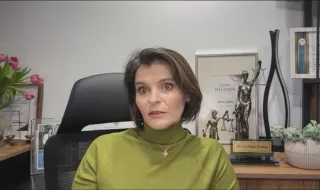
The topic was commented on by medical law lawyer Maria Petrova. According to her, if the assumptions about fictitious hospitalizations are confirmed, there are several possible mechanisms. Among them is reporting a patient who was not in the hospital at all, as well as preparing hospitalization documents after only an examination or examination.
“What society calls draining the health fund, in the sense of criminal law is document fraud, because someone compiles or uses a document with false content in order to obtain some benefit for themselves or the hospital“, explained Petrova.According to her, such a scheme could hardly be carried out by the head of a clinic or department alone. The participation of more people would probably be necessary to report fictitious clinical pathways and hospitalizations. Petrova emphasized that the specific mechanism and the responsibility of the individuals have yet to be proven.
Various possible mechanisms are being examined
Petrova also pointed out a hypothesis in which the patient actually visited the medical facility, but for a routine examination or examination. However, the visit could subsequently be recorded in the documents as hospitalization, so that the hospital could receive funds for an activity that was not performed.
She pointed out overdiagnosis as another possible mechanism. In this case, a patient could be given a diagnosis or prescribed treatment that they do not actually need, in order to be recorded on a more expensive clinical path. According to her, however, the different practices must be distinguished, and the investigation must establish which of them were used.
Petrova also raised questions about the period in which the violations were allegedly committed. It covers about four years, which, according to her, requires checking the actions of all persons related to the reported medical activity, as well as collecting sufficient evidence.
Call on patients to check their files
The medical law specialist called on patients to regularly review their electronic health records. This way, they can determine whether they have been reported for hospitalizations, examinations or other medical activities that were not actually performed.
“It is good for patients to be active, but they are not the ones who will control the system. The state must intervene here“, said Petrova.According to her, the problems are related to insufficient and ineffective control, the large number of medical institutions, the unclear mechanisms for concluding contracts with the NHIF and the imbalance between public and private healthcare. Patients with chronic diseases who have been dependent on a limited number of specialists for a long time are particularly vulnerable.
If the violations are proven, Petrova expects action from the state and health institutions. She warned that the investigation should not end with “much ado about nothing“.
“Each of us as a health insured person will be harmed“, said Maria Petrova.“There are many mechanisms and possibilities in practical terms. What has been investigated and what will actually be proven is a completely different matter“, emphasized Maria Petrova.
She also raised the question of whether violations that have lasted for years may not have been detected earlier by the control authorities. Petrova stated that from the publicly available information she sees “interesting coincidences“ between the alleged period of the violations and personnel changes in the hospital and other institutions. However, she stressed that if charges are brought, they must be supported by sufficient evidence.
“The patient is not the only one who can exercise control. The state must intervene here“, she said.“
According to her, it remains to be seen whether charges will be brought after the action and what evidence will be collected in the course of the investigation. She also expressed concern that in an investigation covering such a long period and a large number of people, there is a risk that it will ultimately turn out to be “much ado about nothing”.
Sources: btvnovinite.bg