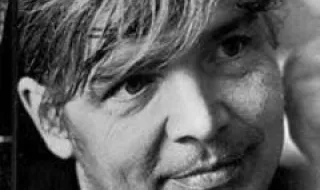
The train leaves Moscow, and the final destination is Petushki – a place that in the eyes of the hero seems almost like a promise of salvation. Along the way there is vodka, conversations, memories, quotes from the Bible and Russian literature, as well as the feeling that an ordinary journey is gradually turning into a parable. This is how Venedikt Erofeev wrote his most famous book – – – Moscow – Petushki“.
Erofeev was born on October 24, 1938 in the village of Niva-3 near Kandalaksha, in the Murmansk region. However, the official birth certificate records the Chupa station in Karelia. That is why there are differences in biographical references about his place of birth. The date indicated by reliable sources is October 24, not November 24.
His childhood was marked by the fate of his father, who was arrested during Stalin's repressions and sent to a camp. Erofeev himself showed an early interest in languages and literature. He entered the philological faculty of Moscow State University, but was expelled after failing to fulfill the mandatory requirements for military training. Later, he studied at several more institutes, but did not receive a diploma.
Author without a permanent profession
For most of his life, Erofeev worked whatever he could find - as a loader, builder, cable technician, librarian, security guard, and employee in various expeditions. He lived in a number of cities in the Soviet Union and was without permanent registration for a long time. This unstable life became part of his literary reputation, but behind the legend stands a man who had difficulty finding a place in the official system.
„Moscow - Petushki“ was completed between 1969 and 1970. The text began to circulate through samizdat - unofficial typewritten copies that readers passed on to each other. The first publication was in Israel in 1973, and in the Soviet Union the work officially appeared only in 1989, initially in an abbreviated and censored form. The book has been defined as a prose poem because of its mixture of narration, monologue, philosophical reflections and verse fragments.
Between autobiography and myth
The character Venichka reminds us of the writer himself, but Erofeev does not fully accept the unambiguous identification between author and character. In a conversation recalled by „Vechernyaya Moskva“, he describes the book with disarming simplicity:
„It's just a drunkard on a train.“Behind this phrase, however, is a text in which the journey becomes a conversation about loneliness, faith, love, the state and the impossibility of one reaching the promised place.
Among his other works are the play „Walpurgis Night, or The Commander's Footsteps“, essays on Vasily Rozanov and Nikolai Gogol, as well as notes published posthumously. Erofeev claims to have written a novel about the composer Dmitri Shostakovich, but the manuscript has been lost. The story further reinforces the feeling that facts and literary myths are constantly intertwined around him.
The writer died in Moscow on May 11, 1990, from throat cancer, at the age of just 51, and was buried in the Kuntsevo cemetery. He remains best known for one book, but “Moscow - Petushki“ continues to be read as a simultaneously funny, bitter and sad map of the late Soviet man - a man who travels to Petushki and never reaches them.
Sources: themoscowtimes.com, meduza.io, vm.ru