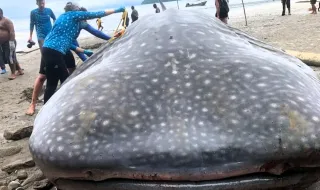
A six-meter whale shark became stranded near Nabuga Beach in Bahia Solano Bay, Colombia, and died before rescue teams could reach it. The animal was found alive on September 30 with visible injuries, Gazeta.Ru reported, citing the Colombian newspaper “El Colombiano“.
Locals doused the shark with water and tried to pull it back into the sea with boats. However, their engines were not powerful enough to move a specimen of such size. Nabuga is about an hour and a half by boat from the center of Bahia-Solano, and limited connectivity has delayed the reporting of the alert.
Codechocó received the information shortly after 8:00 and activated the protocol for responding to stranded marine fauna. Together with the coast guard, the municipality and conservation organizations, representatives of the service went to the site, but when they arrived, the animal was already dead.
Cause of death not yet established
Biological samples have been taken to show whether the death was related to injuries, illness, contact with fishing gear or adverse environmental conditions. There is no final conclusion on the cause yet.
The appearance of a whale shark near Bahia-Solano in late September has been described as unusual. In the Pacific part of the Chocó department, the species usually appears between March and May when it feeds. Carrie Sánchez Mignota, deputy director of Codechocó, said: „This is not the migratory season for the species and therefore it is necessary to assess what happened to the animal.“
The whale shark is the largest fish in the world. Adults can reach between 12 and 20 meters, but despite their size they are not dangerous to humans. The species feeds by filtering plankton, krill, small crustaceans and small schooling fish.
In Colombia, whale sharks are most often seen around Malpelo Island between July and October, and around Gorgona Island in May and June. Their appearance directly off the Pacific coast in areas such as Nuqui, Bahia Solano and Chocó is less common. The species is listed as endangered on the International Union for Conservation of Nature's Red List, with the main threats being collisions with vessels and accidental entanglement in fishing gear.
Sources: elcolombiano.com