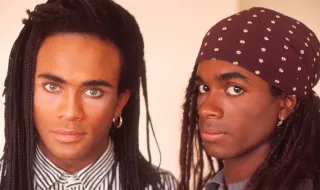
In 1989, Milli Vanilli seemed like the perfect pop phenomenon: two young faces, long braids, choreography and songs that sounded on radio stations around the world. Just a year later, those same songs turned Rob Pilatus and Fabrice Moravan into symbols of one of the biggest scams in the music industry.
The story begins in Germany, where producer Frank Farian created the project in 1988. Pilatus and Moravan were chosen as the public faces of the group. They dance, appear in videos and go on stage, but the vocals on the recordings are performed by studio singers.
Hits with foreign voices
The musicians behind the vocals include Brad Howell, John Davis and Charles Shaw, and the background parts are recorded by sisters Jodi and Linda Rocco. They remain almost unknown to the public, while the faces of Pilatus and Moravan become the center of a huge advertising campaign.
The European album All or Nothing was reissued in the United States in 1989 under the title Girl You Know It's True. It sold about 7 million copies in the United States, and three of the songs – Girl You Know It's True, Blame It on the Rain and Girl I'm Gonna Miss You – reached number one in the US charts. According to the Washington Post, it was Howell and Davis' vocals that were behind the album's success.
In February 1990, Milli Vanilli received the “Grammy“ award for best new artist. By that time, there were already doubts about the origin of the voices, but the duo's popularity had reached its peak.
The moment the recording broke
The first visible sign of the problem came during a television appearance in July 1989 in Bristol, Connecticut. The pre-recorded vocal track began to break up and repeat the same fragment of the song. The scene remained in the archives, and the question of who actually sang on the songs began to return more and more often.
In November 1990, Frank Farian publicly admitted that Pilatus and Moravan did not perform the vocals on the album. The revelation was confirmed by both men themselves. In an interview with the Los Angeles Times, Rob Pilatus described the situation as follows: “We sold our souls to the devil.“
Pilatus and Moravan stated that they wanted to sing with their own voices on subsequent recordings. They later claimed that they were pressured to continue their role on stage. The record company Arista denied knowing that the two did not participate in vocals on the album.
“Grammy“ no winner
On November 19, 1990, the Recording Academy revoked Milli Vanilli's Grammy Award. The decision was made after it became clear that the information on the album was inaccurate. According to the Los Angeles Times, this was the first time in the history of the awards that the award had been revoked.
The scandal did not end with the return of the statuette. The album was pulled from Arista's catalog, and Pilatus and Moravan lost their stage name Milli Vanilli. They attempted a new beginning as Rob & Fab and recorded with their own voices, but the public already associated their names with the fraud.
Rob Pilatus died in 1998 at the age of 32. Fabrice Moravan continued to record music and later told his version of what happened. The story of Milli Vanilli remains not just a playback scandal, but an example of how image, marketing and sales can overtake the artists themselves - until a damaged vocal tract brings the whole structure to a halt.
Sources: latimes.com, washingtonpost.com, theguardian.com