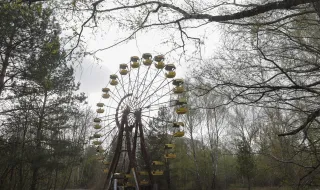
Almost two million people visited the museum at the former Auschwitz concentration camp in Poland last year. About 1.2 million tourists annually visit the island in the US, where the infamous Alcatraz prison is located. In 2025, when it will be 80 years since the atomic bombing, Hiroshima was visited by just under 15 million people.
These numbers show how popular the so-called dark tourism - travel to places associated with death, suffering and tragic historical events - is. From memorials and museums to sites scarred by atrocities and natural disasters, such destinations attract people with different motives. For some, the visit is connected to their family history, for others - with curiosity and a desire to better understand even the most difficult moments of the past.
Looking at the personal belongings of those killed in Auschwitz or reading the names of those who died in the September 11 attacks can have a deeply personal meaning. Such places preserve the memory of the victims and allow visitors to make sense of the tragedies.
The basic definition covers visits to places associated with tragic historical events, usually marked by death and suffering.
Dr. Philip Stone, founder of the Institute for Dark Tourism Research at the University of Central Lancashire in 2012, explained to The Independent that this phenomenon presents and honours “our famous dead within the visitor economy“ through museums, exhibitions, monuments, historical sites and tourist attractions.
He says dark tourism makes tragedies and disasters part of the modern tourist experience, while raising questions about difficult historical legacies, memory and how visitors perceive the past.
“The dead in dark tourism can warn us of our own struggles, follies or misfortunes“, says Stone.
However, the practice has also drawn criticism. Some fear that tragedies could become a commercial product, while others believe that certain countries do not want to be associated with such places in the tourism sector. Stone defines dark tourism as an area fraught with managerial dilemmas and political difficulties, as visits to places with a dark past are often associated with ethical issues.
What is not dark tourism?The reasons why people visit such places are the subject of much scientific research. The Institute for Dark Tourism Research studies both the social and cultural dimensions of the phenomenon and the ways in which museums and sites associated with difficult historical events are managed.
„The line between commemorating the dead and commercializing them is becoming increasingly blurred. "Although in dark tourism we never encounter the corpse directly, we encounter tourist-adapted narratives of doom, and significant dead people can mediate our own sense of mortality," Stone notes.
He also describes the connection between dark tourism and a kind of secular pilgrimage – journeys in the footsteps of the dead, such as to battlefields and conflict zones.
“It is ironic that in a world that seems to be spinning faster and faster, dark tourism is focused on death and the dead, but perhaps tells us more about life and the living“, the researcher adds.
The creator of the online travel guide dark-tourism.com also emphasizes that this form of travel should be a respectful and educational exploration of the difficult pages of history, without sensationalizing the events.
According to the site, dark tourism should not be confused with visits to poor neighborhoods, known as “ghetto tourism“, with trips to actual war zones or with dangerous activities such as cave exploration. It also does not excuse disrespectful behavior by visitors – for example, taking selfies and posing for photos at places like Auschwitz.
Many monuments, museums and historical sites are designed primarily as spaces for commemoration and reflection on the past, but also as a constant reminder of the consequences of human actions.
Why do people visit places of death and suffering?Dr. Duncan Light, lecturer in tourism management at Bournemouth University and author of reviews of dark tourism research, points out that one of the most common misconceptions is that visitors have an unhealthy attraction to death.
“One of the biggest is that people who visit places of death and suffering have a sick and painful attraction to death. However, there are many studies on why tourists go to such places and they find virtually no evidence of such motivations“, he explains.
According to him, the main reasons are the desire to learn more about the past, to honor the memory of the victims and to see in person the places where tragic events took place. Other visitors are looking for a connection to their own family history or to places that are important to their national identity.
“None of these motives are particularly dark“, concludes Dr. Light.
Source: Vesti.bg.