Comment by Emilia Milcheva:
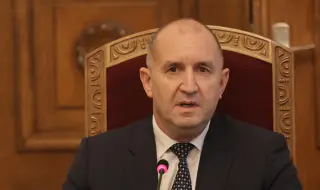
No one is spared from the swindler in the 21st century, and the president's political project, which is still in its embryonic stage, has not escaped it either.
The news about the "Third March Movement", which appeared on December 20 at the "Chrysanthemum" hotel in Sunny Beach, is reminiscent of those events where people are invited to supposedly give a lecture, and then they are pushed low-quality goods or a contract for participation in some pyramid scheme.
Who is behind "March 3"?
The formation has the ambition to mature into a party and participate in the early parliamentary elections next spring. In an attempt to demonstrate pro-presidential loyalty, its chairman Tihomir Atanasov even stated that they support Rumen Radev's policies and accept him as their informal leader. Behind this message is a suggestion that Atanasov will almost certainly support the party until Radev "steps down", similar to the situation 19 years ago, when Tsvetan Tsvetanov headed GERB, since Boyko Borisov was still mayor of Sofia.
By the way, it is enough to look at the genesis of the leader to clarify the whole picture. Before "March 3" Tihomir Atanasov participated in the "Justice for Bulgaria" party of former Prosecutor General Ivan Geshev, as well as in "Bulgaria without censorship" of Nikolay Barekov - all related to the "Borisov-Peevski" model. In such formations, one can only apprentice for a smaller version of their leaders, and Atanasov seems to be ambitious for party building.
Does Radev have anything to do with it?
The well-founded assumptions that this is hardly a presidential project appeared along with the missing names. And even before Rumen Radev officially stated that this project has nothing to do with him.
No individuals from the initiative committee for the elevation of Radev to head of state or from his caretaker governments have been announced. Names such as Prof. Iskra Baeva, Vessela Lecheva, boxer Tervel Pulev, Prof. Andrey Pantev, Acad. Ivan Yuhnovski, Dr. Tsvetislava Galabova and others are absent.
Imitation of trademarks is a tried and tested trick - from food to fashion accessories and even parties. This is how consumers are misled, and until the legal dispute over intellectual property is clarified, some have made money and others have made voters. The main goal of political formations that duplicate names is to disperse the vote for those whose mentees appear. Sometimes they succeed.
Poisonous Doppelgangers Are Not New Yesterday
It was precisely the appearance of "poisonous doppelgangers" that prevented the NMSV (National Movement Simeon II) from receiving a majority of 121 votes in the 2001 elections. Then, one MP was not enough for them. Two other parties with similar names participated in the vote - the "Simeon II" Coalition and the "National Unity for Tsar Simeon", which won a total of about 260 thousand votes (5%). The result is that the NMSV has acquired a coalition partner in the person of the MRF.
Named surrogates are multiplying. "Coalition for You Bulgaria", for example, confused voters with "Coalition for Bulgaria", with which the BSP ran in elections for a long time, but stopped using it after 2014. And in the local elections in 2011, the "Green Party", "Party of the Greens" and the "Greens" party registered to participate in the CEC.
Probably to protect a possible presidential project from such problems, Vessela Lecheva, who is close to Radev and a former minister in his official offices, retained the rights to the PP brand "March 3" until August 4, 2033 and two years ago registered the "Third March Movement".
Is this a problem for the president's plans?
The president has been associated with "Third March" since 2023, when he announced the creation of a national movement with that name in order to preserve this date in the national memory and Bulgarian statehood. On March 3, 1878, the San Stefano Peace Treaty was signed between representatives of the Russian and Ottoman Empires, which officially ended the Russo-Turkish War, and Bulgaria was scheduled to become an autonomous principality under the rule of the Sultan. Later that year, the treaty was revised in Berlin, and the territory of the Bulgarian state was significantly reduced.
Radev himself recently warned of a possible fraud. He said that if he decides to register a party, he will announce the news himself and lead it. "March 3rd Movement" and "Movement for a Presidential Republic", as well as any other products, have nothing to do with me. Those who pretend to act on my behalf are the oligarchy's stooges," he said.
The first comments were not long in coming. The new party looks like something between a "poisonous double" and "deceptive maneuver", commented sociologist from the "Measure" agency Parvan Simeonov on bTV.
This maneuver can be both misleading and deterrent. Registering a name as a trademark does not mean that it is also the name of a political formation. When considering an application for registration, the Central Election Commission and the court will check whether the name is already registered as a party. If it comes to a legal dispute, the case would delay any project.
Unless Rumen Radev has chosen another name. Let's say - "Alternative for Bulgaria". If he has decided to run for an alternative at all.