Author: Martin Atanasov
Bulgaria is entering a great and historic election. Not because we are in the era of Trump's great things, but because by all objective indicators, something we have never seen before awaits us. A record number of participants, high voter turnout and a new political energy that still smells of the square from December. To put it briefly: all the ingredients are there for an unpredictable, undecided and truly interesting political event. With the caveat that the recipe does not guarantee the dish in the end.
Arithmetic is merciless
The view of the current situation, the final right before the deadline for registration with the Central Election Commission expires, is stunning. Rumen Radev has come down from "Dondukov" 2 and is entering the game directly. The Bulgarian Socialist Party is trying to reinvent itself under the new leadership of Krum Zarkov. An Anti-Corruption Bloc has appeared, headed by the acting Minister of Agriculture Ivan Hristanov and his "Union". "Nepokorna Bulgaria" by Kornelia Ninova will also join. And as a fitting finale, the new civic union "Siyanie" by Nikolay Popov was also announced. It's a good thing that at least Generation Z did not (we) make a party.
All this sounds like a rich menu. The problem is that a rich menu does not necessarily mean a good dinner - especially when half of the dishes will remain in the kitchen. The arithmetic is merciless: in the last elections, the 4% threshold for entering the National Assembly cost about 100 thousand votes. Now, with a much higher turnout expected, this number is doubling. That is, a significant part of these new votes for change - votes of people who voted for the first time or returned after years of apathy - will go to formations that will have a very difficult time entering parliament. To put it bluntly: for the general idea of change and reform in Bulgaria, these votes will evaporate and will only contribute to a larger majority of those who will jump the threshold (mainly the status quo). We are talking about votes cast with hope, which, however, will in practice work against hope. This is not a conspiracy, but cruel mathematics.
Hope is real. The problem is that it is everywhere.
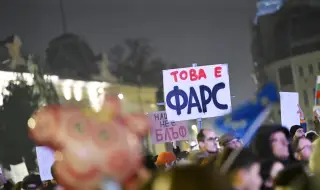
What happened in Bulgaria in recent months should not be underestimated. People took to the streets, overthrew the government, felt, perhaps for the first time in many years, that things were not predetermined. This hope is real and it is huge - and certain forces are making serious efforts to put it under a lid before it has managed to materialize into something lasting. It is sad that they seem to be succeeding.
But the problem is not only outside or in the unfriendly status quo - it is also inside. Any real change must make its transition from the square to the ballot box. And here comes the cherished moment - we have a number of new participants and formations, each of which brings its own version of hope. Everyone is convinced that their direction is the right one. And no one seems ready to realize that 121 seats in the National Assembly - the only real threshold result for visible and lasting change - are achieved together, not separately.
Figuratively speaking: we have a big bucket of water - the protest energy, the civil anger, the desire for change. And instead of pouring it where it needs to be, we pour it into small cups. Each cup is full of hope. But none of them extinguishes the fire. That's how it is in Bulgaria: we don't like to come together - we like to divide. And just when the moment requires unity, everyone pulls in their own direction.
Reality check
This is how we get to what these elections can bring: not a flame of hope, but a slap that will bring us back to reality. Heavy, unexpected and equally painful for everyone. For the optimists in the squares - because it will turn out that the protest energy has not been transformed into parliamentary power. For the young - because they will have voted for change again and will again see it diluted in coalition arithmetic. For all those who believed that December 2025 was a turning point - because the moment is turning only if something really turns around after it.
Instead, it is very likely that the masses will vote again for a new savior. Because that is what we are used to - to believe in promises, without asking about the price, without being critical. A new label on an old bottle. And we traditionally buy the label, the fruit of good advertising and skillful PR.
Maybe this is exactly what we need
And maybe this is exactly what we need. Not cathartic, but confusing everyone's plans. Borisov's, Peevski's, the new saviors' and the old reformers'. And yes - to ourselves. Because the only thing that prevents the system from reproducing itself is unpredictability. It does not like surprises.
And if these elections make us, after yet another hit against the wall, finally ask the right question - not "who will fix us", but "when will we stop waiting for someone to fix us", maybe they will have done their job. Even if they seem like a failure. Because reality may hurt, but it awakens.