The Islamic Republic is fighting for its survival, and the Revolutionary Guard is clearly ready to do anything to maintain power. What is Iran's strategy in the war with the US and Israel? And why is Kharg Island intact for now?
"There is no room for diplomacy unless the economic pressure increases to such an extent that other countries intervene to ensure the end of the American and Israeli aggression against Iran," Kamal Karazi, an advisor to the Iranian supreme leader and former foreign minister, said in an exclusive interview with CNN.
His words actually reveal the strategy of the Islamic Republic since the beginning of the American and Israeli strikes against the country. According to sources in Tehran, this strategy was developed in the weeks following the 12-day war in June 2025.
To make the war too expensive
The closure of the Strait of Hormuz, the attacks on energy infrastructure - from Qatar to Bahrain to Saudi Arabia - all pursue the same goal: to make the war too expensive, not only for the US and Israel, but also for the world.
The Islamic Republic is fighting for its survival, and the Revolutionary Guard is clearly ready to do anything to maintain power. It controls the main defense capacity, and the choice of the late Ali Khamenei's close son - Mojtaba - as the new supreme leader is a clear signal that the Revolutionary Guard has far from loosened its grip on power.
At the beginning of the week, the price of oil jumped above $110 per barrel - a record since the start of the war in Ukraine. The big question now is: how capable is the regime in Tehran of continuing to fire missiles and drones at energy targets in the region, so that the pressure on world markets can be maintained?
As early as March 5, the commander of the US Central Command, Admiral Brad Cooper, reported that Iran had launched 90% fewer missiles and 80% fewer drones since the beginning of the conflict on February 28.
Why is Kharg Island intact?
Israel has already struck oil depots in Iran, but the most crucial point of the country's energy infrastructure remains intact. The island in question is Kharg Island, which was built in the 1960s by the American oil company Amoco and serves as a major export terminal for Iranian oil. Today, 90% of Iran's oil is exported from the island, located in the northern Persian Gulf.
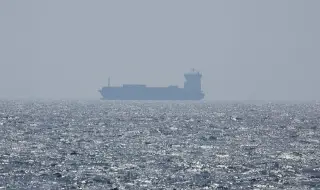
Despite attacks on key energy facilities both in Iran and in the region, Kharg remains a non-target for now. There are reports that several tankers have even refueled there in the last week, the "Financial Times" indicates, and on Friday evening one tanker even passed through the Strait of Hormuz. The bulk of the oil that Iran exports is destined for China.
Kharg Island has been a red line for American policy for decades, but in recent days, Washington insiders have not completely ruled out action against it. However, this would seriously change the conditions for both today's Iran and the country's future. "If the regime change is successful, it will make the next government extremely weak," energy expert and diplomat Richard Nephew commented to the "Financial Times". "This doesn't mean the island won't be a target, but it explains why it hasn't been so far."
Will Trump be forced to stop the war?
The rise in oil and gas prices is already increasing political tensions - both in the United States and in Europe. Republicans overseas are preparing for midterm elections this fall, and further price increases could prove problematic for them. Experts told Reuters that it is therefore entirely possible that Donald Trump will seek a way out by declaring victory after the assassination of Iran's supreme leader, the destruction of the country's nuclear and missile capabilities, as well as key military infrastructure. For Tehran, the mere survival of the regime would be enough to declare triumph.
On Monday, March 9, Trump said that the war would continue "a little longer", which immediately led to a serious calming of fuel prices.
In his recent statements, however, the American president seriously contradicted himself. He stated that "he has a plan for everything", and that the end of the war is approaching. Only days before, however, he emphasized that the goal is the capitulation of the regime in Tehran and "building a new state".
Which goal will prevail probably depends on the price that the United States and the world will have to pay to achieve it.