Comment by Emilia Milcheva:
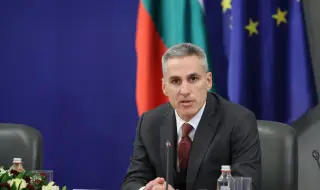
"Black Swans" have befallen the caretaker government of Andrey Gyurov. Some of them are global crises, others - regional, others are the result of internal political tension and the upcoming eighth elections in Bulgaria since 2021.
For an interim government with a limited mandate and a main task to organize fair and democratic elections, even one of these crises is enough. But they all came together.
Gyurov's cabinet is forced to govern in conditions of constant political pressure, growing public expectations, fears and trade union protests. Moreover, his work will not end with the elections in a month - he will govern at least until May. This means working in conditions of uncertainty: he will have to balance the economic consequences of the energy crisis, meet social expectations and coordinate his actions with regional partners such as Greece and Romania.
These fears and tensions, fueled by global conflicts and Bulgarian compromising materials, affect citizens and the choices they make. Emotions override reason. This means that populist and radical messages will have a greater effect, because they promise easy solutions to problems.
The shooting of compromising information at figures from the official cabinet in his first days suggests that this will be the case until the end. And every attack, as well as every success, will inevitably affect the PP-DB, since the prime minister and some of the ministers are affiliated with the coalition.
Look at Iran, remember Ukraine
The war against Iran led to sharp jumps in crude oil prices by 20% to 40%. The Brent grade, used as a reference price for international contracts, has exceeded $100 per barrel several times. Given the threats of the regime in Tehran to double this price, countries will be forced to consider protective measures for their citizens and businesses.
For Bulgaria, dependent on imported oil processed in the "Lukoil" refinery, the domino effect will follow. Fuel prices will rise - their price has already increased by ten euro cents. The growth is expected to continue in the coming weeks, and there are forecasts for about 1.60 euros per liter at gas stations, since the war is unlikely to end by the end of March. Now, mass-produced A95 gasoline is sold for about 1.95 euros, and diesel - 1.47 euros per liter. The effects on transport, food and services, and from there - on inflation, will not be long in coming.
Although Bulgaria is no longer last in standardized purchasing power (reflects the real cost of living relative to income) in the EU and is ahead of Greece, Romania, Hungary, Slovakia, the new price increase means another economic stress after the wave of rising prices just before the introduction of the euro. And the political price of this appreciation will almost inevitably be paid by the government.
Prime Minister Gyurov and Finance Minister Georgi Klisurski announced that 30 million euros per month are needed only for measures intended for vulnerable groups, including some pensioners. After analyzing data from the National Revenue Agency, the circle of persons to be assisted will be determined. Support aimed at businesses is also being considered, primarily food supply companies. But these measures, which are in practice state aid, will have to wait for notification from the European Commission (EC). This process takes at least three weeks.
Finance experts have already objected to these measures. Economic expert and former Deputy Minister of Economy Nikola Yankov described them as a populist move with a pre-election purpose, who stated on bTV that extinguishing inflation with state money is like extinguishing a fire with gasoline. The Bulgarian state has been doing this with electricity compensation for businesses since 2021, which has so far been supported with nearly 6 billion leva. But it has never tried to find a solution on how to support energy-poor households.
The outbreak of the war in Ukraine four years ago put pressure on the coalition cabinet of Kiril Petkov (PP), sending the prices of energy raw materials and electricity skyrocketing. Natural gas for households in Bulgaria rose by about 108% in the first half of 2022 compared to the first half of 2021, which placed Bulgaria among the three countries with the highest growth in the EU.
Bulgaria, as well as Europe, paid dearly for reducing Russian energy dependence. "Gazprom" unilaterally terminated the contract for the supply of blue fuel and it was necessary to quickly complete the gas connection with Greece - a project that had dragged on for more than 10 years. Bulgaria has also started buying liquefied gas and is diversifying its supplies.
What anti-crisis measures are other countries in Southeastern Europe now introducing to cushion the shock of rising international energy prices? Serbia has temporarily banned exports to protect the domestic market and prevent shortages and price spikes; a reduction in excise duty is also being discussed, as are proposals for support for citizens and businesses. Croatia has introduced a price cap on petrol and diesel - diesel is capped at 1.55 € per liter and petrol at 1.50 €. Greece has imposed a cap on fuel profits (maximum 12 euro cents above the wholesale price) at petrol stations. Supermarkets will be fined up to 5 million euros if their profit margins exceed the average for 2025.
Albanian and Kosovo regulators are also monitoring the market and applying limits on fuel sales margins.
Protests, "Petrohan", prosecutors
In Bulgaria, however, the tension over fuel prices was added to by protests organized by unions for higher wages in companies that receive subsidies from the budget. In the end, they prevailed and the cabinet decided to raise the salaries of nearly 30,000 employees in BDZ, NRIC, "Bulgarian Posts" and municipal transport companies by 5%. Subsidies for passenger transport on unprofitable bus lines are also included. For this purpose, 31.3 million euros are allocated, which are a temporary measure until a regular budget is adopted. This also applies to budget employees, who also received a 5% increase at the beginning of the year.
The official cabinet is trying to calm the discontent through partial salary increases in individual sectors. This is a classic dilemma: if it does not do so, it risks protests; if it increases spending, it will be accused of pre-election populism and pressure on the budget.
The "Petrokhan-Okolchitsa" horror with the six bodies discovered, around which all kinds of conspiracies have erupted, will continue to feed the public's fantasies - despite the fact that the prosecutor's office does not change its conclusion about the absence of external interference. Information is expected about the movement of 44 accounts of the non-governmental organization to which the dead belonged. A forensic psychiatric, psychological and sexological examination is also to be appointed, which is expected to clarify the possible motives for the crimes and the lifestyle of the five men and one underage boy.
So even if the parliament goes on a one-month vacation due to the election campaign, the fire on the topic will be maintained. Except that the insults of sectarianism and pedophilia directed by the ITN and the DPS-NN towards their colleagues from the PP-DB will not be heard in the plenary hall.
But every new detail of the investigation will be unraveled, exaggerated and politicized. The accusations and rumors, together with the active campaign of relatives of the deceased, are already forming a narrative that can hardly be extinguished. In this context, Gyurov's cabinet must be especially careful, after it was initially accused by MPs of trying to cover up the truth about the tragedy.
A crisis never comes alone. For Gyurov, this is a test - a chance to show resilience and harden himself in power. Then, who knows, he may even be nominated as a presidential candidate of the democratic community.
But first he must deal with the "black swans".