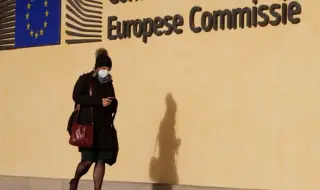
A further EU enlargement may increasingly depend not only on the readiness of candidate countries to join the union, but also on the political and social dynamics within the union itself. This is what Iliriana Gioni of the Carnegie Endowment for Europe writes.
Russia's war on Ukraine has turned enlargement from a distant aspiration into a strategic necessity. The membership of countries such as Ukraine and Moldova has returned to the center of political debate, while the momentum for reforms in the Western Balkans has strengthened, reopening issues that until recently seemed politically frozen. Albania's recent fulfilment of key interim accession criteria and Montenegro's preparation for an accession treaty show that for some countries enlargement is becoming a practical rather than a theoretical prospect.
For decades, the EU has invested heavily in preparing its candidates for membership. It has helped them reform their institutions, harmonise their legislation, strengthen their governance and adopt common standards. Enlargement policy is still based on the assumption that if the candidates are ready, political agreement within the Union will inevitably follow.
Increasingly, this assumption is no longer valid. Accession ultimately depends on political approval within the Member States, where governments are formed under the influence of party politics, public opinion and wider societal attitudes. The problem is not simply that Member States can block enlargement - this has always been the case. The problem is that political support becomes increasingly fragile when citizens only have a cursory knowledge of the countries with which they may soon share common institutions.
Today, EU enlargement no longer benefits from the tacit consensus that accompanied post-Cold War integration. Instead, it often becomes a convenient explanation for various problems in member states. Moreover, enlargement takes place in a context of geopolitical uncertainty, migration concerns, democratic regression, economic insecurity and declining trust in institutions. Public support for enlargement exists, but it remains superficial, conditional and vulnerable to internal political disputes.
The result is a double challenge in terms of legitimacy. In candidate countries, the long wait for progress weakens confidence in the fairness and reliability of the accession process. In the Member States, enlargement risks becoming politically fragile when future members remain distant abstractions.
Europe has already faced similar dilemmas.
In the decades since the Second World War, integration has never been seen as a purely institutional process. Politicians have understood that reconciliation - especially between France and Germany - requires more than treaties. It depends on public recognition. Town twinning, youth exchanges, educational partnerships and permanent contacts between future generations help to create habits of coexistence long before political integration deepens.
Europe did not just prepare countries for integration. It prepared societies to live together.
Many of these tools still exist today. Programmes such as Erasmus+, the European Solidarity Corps, municipal partnerships and youth initiatives are already trying to bring candidate countries closer to the Union, albeit unevenly. The European Commission is increasingly aware that while candidates need to prepare for membership, Europeans also need to prepare to welcome a larger European family.
The problem is not a lack of tools, but a lack of strategy. Existing initiatives remain fragmented, poorly coordinated and only loosely linked to enlargement policy itself. Much emphasis continues to be placed on communication - explaining why enlargement is important, countering disinformation or presenting the geopolitical arguments for accession. These efforts are important. But informing societies about an enlargement that remains largely abstract is not the same as preparing them for the reality of membership.
Political legitimacy requires knowledge. Citizens are more likely to support what they understand and recognize. The more candidate countries are present in the public debate and in the daily lives of Member States, the more likely they are to be perceived as equal partners.
Fortunately, this process has already begun. Albania’s transformation into a popular tourist destination has increased public awareness of a country that until recently was almost absent from the European imagination.
But if institutional readiness has long been one pillar of enlargement, the EU may now need a second, complementary pillar, aimed at public readiness within the member states. As candidate countries move through the stages of negotiations and meet the conditions for membership, public readiness within the Union itself must also deepen.
Not all candidates move along the same timeline. Therefore, the European approach to mutual recognition must reflect this reality. As negotiations progress and the likelihood of membership increases, candidate countries should become increasingly visible.
For countries close to membership in the coming years, Member States and EU institutions should prioritise partnerships between public media, cooperation between municipalities, exchanges between journalists and students, and cultural programmes that bring candidate countries into everyday public life.
The aim should not be to circumvent democratic debate. Attempts that could be perceived as artificial consensus-building are likely to backfire. The aim is more limited and more democratic - to ensure that political debate is conducted in conditions of knowledge rather than abstraction.
This is important because previous enlargements have sometimes created the feeling that integration has happened around citizens rather than with them. After the 2004 enlargement, concerns in some Member States contributed to broader political concerns, particularly during the constitutional debates in France and the Netherlands. Future enlargements will be difficult to succeed politically if citizens perceive them as a fait accompli.
For countries with a longer journey ahead, such as Ukraine, existing mobility programmes should place greater emphasis on mutual exchange. Enlargement remains largely a one-way socialisation process - applicants are expected to get to know Europe, while Europeans have only limited knowledge of the candidate countries. "Erasmus+" could create specific enlargement-oriented strands, with a priority on training, traineeships and student exchanges, and the European Solidarity Corps could expand volunteering programmes in municipalities, schools, local media and civic projects. Political legitimacy is more likely to be maintained when the familiarity flows in both directions.
Finally, this mutual familiarity must increasingly be linked to opportunities, so that the expertise of the candidate countries has professional value in different fields. The more citizens see real educational and career prospects linked to enlargement, the more naturally the candidate countries will be perceived as part of Europe's future.
Europe once understood that political integration required purposeful public preparation alongside institutional change. Today's enlargement needs the same instinct - not by creating entirely new institutions, but by making more purposeful use of existing ones.
The EU has spent decades preparing the candidate countries for accession. But for the next enlargement to be successful, the Union must also prepare itself.