In April, China delivered less than a kilogram of the rare earth metal germanium to Germany, as well as three kilograms of the no less valuable gallium to Malaysia. According to Chinese customs data, other countries received nothing, and this, according to analysts, perfectly illustrates how China uses its leadership position in key areas related to modern technologies.
Without germanium, high-speed data transmission over fiber-optic cables is not possible, neither night vision devices nor high-efficiency solar cells used in space probes and satellites work. And without gallium compounds, 5G networks are not possible, fast chargers overheat, and barcode scanners in supermarkets fail.
Christian Hell from the Frankfurt-based raw materials supplier TRADIUM believes that if Germany, which has been secured with important raw materials until now, now runs out of them, it would be a clear signal.
Production in China and for China
The example of the BASF concern clearly shows the scale of the interest of German businesses in the Chinese market. At the end of March, the chemical giant from Ludwigshafen opened a huge plant worth almost nine billion euros in Jiangjiang, South China.
There, BASF produces components for the Chinese automotive industry and for companies that produce plastics. Among other things, in China the German concern can safely rely on cheap oil and gas from Russia.
With the construction of the plant in Jiangjiang, however, BASF is becoming increasingly dependent on the goodwill of the Chinese state and party leadership. This dependence has been sharply criticized by Washington. The US National Security Strategy states: “The war in Ukraine had the opposite effect, increasing the external dependence of Europe and especially Germany. Today, German chemical companies are building some of the world's largest processing plants in China and using Russian gas there, which they cannot obtain at home”.
At the same time, as observers note, by producing in China, German companies are contributing to flooding the world market with goods from local production facilities. While the economy stagnates inside the country, the export machine is working at full capacity. China is becoming less and less dependent on imports, while the rest of the world is increasingly dependent on goods made in China. "We underestimated China and now we are learning this lesson very painfully. And then we complain that we did not know this earlier," China expert Manuel Vermeer told DW.
China's long-term economic strategy is bearing fruit
At the beginning of China's market reforms, German companies benefited from the creation of joint ventures and access to the local market. At the same time, they shared their experience, while today the roles are reversed.
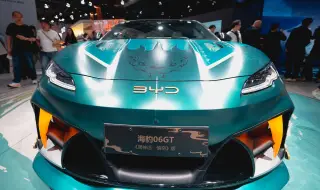
“The first German companies arrived in China in the early 1980s. Then it was necessary to create joint ventures - for example in the automotive industry,” recalls Vermeer. And the Chinese, according to him, have been watching everything very carefully and have learned. “And now, as we know, they have largely overtaken us in this area. They put out fantastic cars that not only look great, but are really good."
The Germans' self-confidence turns against them
„At the time, we thought: let's go there and show the Chinese what we do. In that case, they might as well copy something. But with typical German self-confidence, we assumed that they would never be able to do everything right - the way the Germans do it with their strict standards and exceptional engineering experience," the expert recalls.
And the Chinese listened carefully and learned, so that one day they could do the same things just as well or even better than the Germans. This development was predictable in its early stages, judging by the growing competitive pressure from China, especially towards Germany, Japan and South Korea.
Chinese students outperformed their German teachers
“They copied a lot from us, probably not always legally”, Vermeer points out, giving the example of BMW's Chinese partner, the company Brilliance. At the company's plant in Shenyang, it was possible to see how only one door separated the two halls, in one of which BMW cars were assembled, and in the other - Brilliance with copied German technologies. “It was the same with Volkswagen.”
The expert believes that China's transformation into a leading global manufacturer was predictable based on the industrial policy planning documents published by the Chinese leadership. “In the Chinese five-year plans 20 years ago, we saw that they paid special attention to electromobility. But we didn't take it seriously then”, says Vermeer.
Will China "eat" German industry?
Economists from the Center for European Reforms CER Sander Tordwar and Brad Setser warn in their study about the “China shock 2.0" and the “price of German complacency". The first "China shock", which began in 2001, hit the US hard, while Germany initially benefited from it.
Now, CER experts note that even Europe's largest economy has come under pressure. "Germany continues to show indecision, although China has already eaten a significant part of its industry for lunch and is now preparing for dinner."
The current five-year plan for the development of the Chinese economy shows the main directions: Beijing is investing in quantum computing, artificial intelligence, the development of humanoid robots and neurointerfaces - systems that create a direct channel for communication between the brain (or nervous system) and an external device. The strategic course is clear: less dependence on the West, greater control over global supply chains. And it seems that difficult times are not only waiting for Germany and Europe.
Author: Thomas Coleman