Comment by Emilia Milcheva:
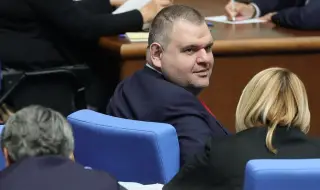
The oligarch Delyan Peevski won the battle for the DPS, but will lose the war for its future. The politician, sanctioned for corruption by the US and Great Britain, is fighting with all his might to preserve the monopoly on the political representation of the Turkish ethnic group. But the monopoly is already crumbling.
The results of the April 19 elections - some of the weakest in the history of the DPS - showed that its influence among the traditional electorate is eroding. A secession of structures and individual activists has begun, timidly so far. But as the local elections approach next year, this process has the potential to intensify, provided that a political alternative - or alternatives - emerges.
Voices for such alternatives are increasingly being heard. The current model, created at the beginning of the transition, has been exhausted due to the replacement of political representation with corporate and clientelistic control. Thus, ethnic identity has become a tool for political mobilization, not for protecting the community.
"Without Peevski and Dogan"
On the program “Agenda” Kasim Dahl, the former Second in the MRF, one of its founders and an associate of Ahmed Dogan, announced the preparations for a new party “without Peevski and Dogan”. And regarding the speculations about a unification between the two wings of the MRF, and therefore between Peevski and Dogan, on the Bulgarian National Radio, Guner Tahir, former deputy chairman of the MRF, rejected such a possibility: "Even if there is a desire, there is no way to achieve unification between them. People in the places are so divided that this is basically impossible".
The division is not only between the two camps of the MRF, it is within the community, where more and more people are looking for a new direction and a different type of political culture.
At this moment, Peevski is returning to causes on which the MRF built its legitimacy in the 1990s. For part of the electorate and especially for the emigrant organizations in Turkey, they have a special charge, because the so-called “revival process” was not just violence to change names, but violence against the right of people to be who they are.
Historical justice or political calculations?
Peevski's parliamentary group has introduced three bills that are more than two decades late. With the changes in the GRAO system, the MRF proposes that the state permanently erase the traces of the forced renaming from the registers, so that these names no longer exist in the official archives. Now, when issuing various certificates and transcripts, Bulgarian Muslims who have experienced the so-called “revival process” are required to use the names forcibly imposed on them.
Todor Zhivkov's regime forcibly renamed over 1.3 million ethnic Turks, Pomaks, Roma and Tatars. Their names were restored in December 1989. The legislative changes also provide for the creation of a mechanism for restoring the names of the deceased, as well as for sanctioning officials who require the use of names from the so-called “revival process”. The Law on the Political and Civil Rehabilitation of Repressed Persons proposes that the supplement to the pension be transformed into a separate pension for repression.
But the most essential for political needs are the changes to the Electoral Code, the purpose of which is to eliminate the requirements for residence in local elections and elections to the European Parliament, as well as to allow the use of the mother tongue in the election campaign. And if the draft laws related to names touch on the painful topic of justice, the changes to the Electoral Code expand the opportunities for participation in local elections for Bulgarian emigrants in Turkey.
At first glance, this seems like an attempt to correct a historical injustice, but they are political calculations. The MRF is bringing these issues back to the public agenda, even though it has not achieved a fair resolution to them during the decades it has been a factor in government. But they are the symbolic capital through which the party maintains its claim to exceptional representation of the community - especially among some of the older voters and emigrant organizations.
Historical memory - a trap for voters
When the present no longer guarantees political loyalty, parties inevitably begin to seek support in the past.
Last week, MRF MP Stanislav Anastasov read from the parliamentary rostrum a declaration of the party against the intention announced by the new majority to close the Commission on Files. As a party "born from the pain of the greatest crime of the totalitarian communist regime", the MRF linked its preservation to the need to preserve the memory of the crimes of this regime.
"We want a broad public debate on the future of the Commission on Files and a discussion of the idea of the Union of Those Repressed by the Communist Regime to create a Museum of Totalitarian Regimes and an Institute of National Memory, which would complement the work of the Commission on Files”, said Anastasov, until recently part of the senior leadership of the MRF, but now an ordinary MP.
This is Peevski's last ditch - historical memory. The MRF insists that they bear the responsibility to preserve it. Speculation on the topic is not new. On the eve of the parliamentary elections in October 2024, Peevski asked the Military District Prosecutor's Office to resume the investigation into the so-called “revival process” and to seek criminal liability and retribution for the guilty. Following his report, the prosecution ordered the identification of “the individuals/agents who worked for State Security under the so-called regional revival process; to question them as witnesses about what tasks were assigned to them by the leading officers and their implementation”. 21 months have passed since this action, without its results being known.
The DPS is not the only formation that opposes the closure of the Commission on Files. Other organizations are also mobilizing. For example, a “silent vigil in defense of democracy” has been announced for Monday evening, organized by the Union of Those Repressed by Communism “Memory”, the Association “Memory for Tomorrow” and the civil organization of former concentration camp inmates from Belene and their families “Justice, Rights and Cultural Cooperation in the Balkans”.
For the MRF, however, the defense of the commission fits into a much broader political strategy.
Why is it different now
With the exception of Lutvi Mestan's DOST, none of the parties that have tried to compete with the MRF for the ethnic vote has so far managed to become a real alternative. DOST did not succeed either, although it seceded over 100 thousand voters in the 2017 elections.
When Güner Tahir, Kasim Dal, Mestan and others tried to break the monopoly of the movement on the “Anti-Dogan” principle, it was still at the peak of its influence. Not only because of its strong organization, but also because the belief that the MRF was the only possible political representative still prevailed among the community.
Today the situation is different. The crisis comes from within, and the tension is within the community itself. At the same time, the emergence of “Progressive Bulgaria” changed the place of the MRF in the architecture of power and put an end to its privileged position.
That is why the idea of a new political project does not seem like another attempt at division, but rather a search for an alternative. This is what Guner Tahir thinks when he says that if a new formation emerges, it must be “authentic, desired and supported by the people of Bulgaria“, who “do not wait for some external master to tell them”.
The Turkish ethnic group in Bulgaria has long ceased to be the relatively homogeneous group from the beginning of the transition with similar social and cultural characteristics. It is a much more diverse community - socially, educationally, economically and generationally, and broader than the clientelistic circles of the MRF. And this change has gradually undermined the model in which a party claims to represent not only ethnic Turks, but the Muslim community in general, which includes Pomaks and Roma.
The party brand can be won through court decisions and organizational control. But if new political alternatives emerge in the coming months, the battle will no longer be for the MRF. It will be for the people whom the MRF has considered its unconditional electorate for decades.
Peevski is unlikely to win it.