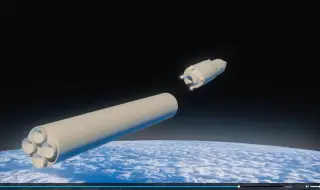
Nine countries now possess nuclear weapons. Arms control agreements, painstakingly built over decades, have collapsed. Geopolitical competition is intensifying the rivalry between nuclear powers. North Korea continues to expand its nuclear arsenal and its means of delivery. China is on track to increase its warhead count from approximately 600 today to around 1,500 by 2035. Meanwhile, Russia bears primary responsibility for the expiration of the New START treaty and is developing a number of new and unusual nuclear delivery systems designed to circumvent missile defenses. These include nuclear-powered cruise missiles with nuclear power plants and nuclear weapons, underwater drones, hypersonic planning warheads, and nuclear-tipped anti-satellite weapons. Joshua A. Schwartz, assistant professor of international affairs and emerging technologies at the Carnegie Mellon Institute for Strategy and Technology, and Michael K. Horowitz, senior fellow for technology and innovation at the Council on Foreign Relations, write for War on the Rocks.
"While much attention has been rightly paid recently to Iran's nuclear program and the prospect of autonomous conventional weapons systems, the possibility that, in the age of artificial intelligence, the very decisions to launch nuclear weapons could be automated is increasingly looming over the discussion.
One particularly worrying possibility is that a country like Russia could automate the use of nuclear weapons. At first glance, this sounds like something that could only happen in a Hollywood movie - like the — was to ensure that the Soviet Union would be able to respond to a possible American first strike with its own counterstrike even if the Soviet leadership were destroyed. In other words, it was essentially a defensive system.
Similarly, Adam Lowther and Curtis McGiffin argue that the United States needs its own "Dead Hand" system to effectively deter nuclear attacks on Washington.
However, it is also possible that automated nuclear systems could be used to pursue de facto offensive and revisionist goals through coercion or deterrence. What if Russia invaded a country like Estonia or Poland and threatened to use nuclear weapons if NATO intervened? The purpose of such a threat could be to deter NATO from intervening in defense of an unjustly attacked state or to force NATO members to abandon their Article 5 commitments.
Usually, such threats are not particularly convincing because of the logic of mutually assured destruction and the norm of non-use of nuclear weapons. But if such a threat is implemented through computerized automation, it may seem more plausible.
A recent survey experiment we conducted among members of the British parliament and the general public suggests that the risk of nuclear states pursuing targets by automating nuclear launch is worth taking seriously. In our study, we presented a scenario in which Russia invades Estonia and threatens NATO countries, including the United Kingdom, with a nuclear strike if they come to Tallinn’s aid.
Worryingly, when Moscow’s nuclear threats were presented as being delivered through an automated system, they were perceived as more convincing and participants were more likely to back down. As dangerous as this is, states may be tempted to create automated nuclear weapons delivery systems to exert more effective coercion on their adversaries.
Why nuclear coercion is difficult
Coercion involves the use of threats against other states to achieve political goals without actually resorting to the costly use of force. As Robert Pape has said, "nuclear weapons can almost always inflict more pain than any victim can bear", so at first glance, the threat of nuclear retaliation would seem to be an effective coercive strategy. But there are two reasons why this is usually not the case.
The first limitation arises when there is mutual assured destruction between two nuclear states. For threats to be persuasive, the state being threatened must believe that the punishment is likely to be carried out if a certain "red line" is crossed.
The problem is that if the threatened state has nuclear weapons and a credible capability to strike back, it could retaliate with a devastating nuclear strike of its own. From a rational perspective, then, carrying out a nuclear threat would be illogical and therefore would lose its credibility under these circumstances.
The second constraint is the nuclear taboo, or the norm against using nuclear weapons, to the extent that it exists. Given the stigma surrounding the use of nuclear weapons — especially when other good alternatives exist — nuclear threats may be unreliable because states would expect the political, economic, and social costs of carrying them out to be too high.
How automation could change the game
Computers don't care whether carrying out a nuclear threat is irrational because it could lead to a nuclear retaliation or other serious consequences — unless it is built into their programming.
By developing and activating an automated nuclear weapons system, leaders can make their threats to use nuclear weapons more credible, since delegating launch authority to a computer allows leaders to literally "tie their hands".
As the infamous fictional character Dr. Strangelove says: "because of the automated and irreversible decision-making process that precludes human intervention, the Doomsday Machine is terrifying and completely credible and convincing".
Of course, computer systems can malfunction or fail, which means that automating nuclear command and control carries significant risks.
During the Cold War, there were several near misses in which early warning systems incorrectly indicated that launched a nuclear attack. This could have led to an erroneous nuclear retaliatory strike if the error had not been detected by a human.
Modern computer systems are also not immune to errors. For example, the Boeing 737 MAX's MCAS automatic flight control system was linked to several deadly crashes of passenger jets in 2018 and 2019, and automated trading systems contributed to the 2010 "stock market crash," when hundreds of billions of dollars in market value were wiped out in just a few minutes.
Computer systems are also vulnerable to hacker attacks. Malicious state or non-state actors could exploit this vulnerability to attempt to provoke nuclear war between their adversaries or to weaken a state's ability to retaliate.
If states automate the processes of launching nuclear weapons through complex and opaque machine learning programs based on artificial intelligence, rather than through pre-coded systems based on clear rules like "Dead Hand", this could further increase the risk that humans will not understand how the system makes its decisions.
Combined with automation bias — the tendency for humans to over-trust computers — this could lead to disaster.
Given these shortcomings, most leaders are unlikely to take the ultimate step of automating the use of nuclear weapons. However, nuclear blackmail has historically been used by states such as the United States during the Taiwan Strait Crisis and by Pakistan during the Kargil War.
Automating nuclear launch may seem like a rational strategy for several reasons.
First, a state that fears a decapitation strike by a more powerful nuclear state might automate nuclear command and control to speed up its ability to retaliate and defend itself in the event of an attack. It is for this reason that Lowther and McGiffin believe the United States needs its own "Dead Hand" system.
Second, the increasing speed of conventional warfare in the age of artificial intelligence may make states fear a rapid conventional defeat and prompt them to automate nuclear command and control to prevent a possible decapitation strike.
Third, if a state is at a conventional disadvantage or the battlefield situation deteriorates, it may resort to nuclear coercion and take the dangerous step of automating the use of nuclear weapons to achieve its strategic goals.
Nuclear weapons automation "works" — to some extent
To test the extent to which automated nuclear threats can influence the views of political leaders and the general public, we surveyed over 100 sitting members of the British Parliament and over 1,000 British citizens.
We presented participants with a hypothetical scenario set in 2030 in which Russia invades Estonia and threatens to use at least one nuclear weapon against NATO if the Alliance intervenes.
This scenario is disturbingly plausible. Russia has made nuclear threats against Ukraine and NATO, and at one point, US intelligence agencies estimated the likelihood of Russia using nuclear weapons at up to 50% if Russian positions in southern Ukraine collapsed.
According to reports in the "New York Times" One of the Biden administration’s simulations involved Moscow demanding that the West end all military support for the Ukrainians — no more tanks, no more missiles, and no more ammunition. This is largely consistent with the scenario we presented to participants in our experiments. automation made Russian threats more credible and effective.
British citizens were over 13% more likely to believe that Russia would use nuclear weapons if its "red line" was violated when the threat was presented as automated, compared to a conventional threat.
British MPs were also 9% more likely to support backing off from defending Estonia when Russia made an automated nuclear threat.
It is telling that automated nuclear coercion can have advantages even when the UK itself possesses nuclear weapons, and Estonia is a NATO member and protected by an Article 5 guarantee.
Although we explicitly told participants in the scenario that an automated system existed, the results raise the question of how a state could convince its adversaries that it actually had an automated nuclear launch — and open up the possibility of bluffing.
Given the risks already discussed, and the fact that political leaders are often reluctant to relinquish personal control over critical policy decisions, governments may be seen as reluctant to delegate the means of mass destruction to computers.
Verifying whether an automated nuclear system actually exists would also be extremely difficult, as states are unlikely to share the code for such systems for fear that an adversary might discover their weakness.
The obstacle to making claims of nuclear automation credible is further compounded by the fact that if the automation of nuclear weapons provides coercive advantages, states may have an incentive to bluff about the existence of such systems in order to reap the benefits without taking on the risks.
However, given the advances in cutting-edge artificial intelligence systems over the past few years — if not months — the idea that a state could automate a nuclear launch can easily seem technically plausible.
If the stakes are perceived as high enough by the coercive state — for example, if it loses on the battlefield and its leaders have to "bet it all in a desperate attempt to get back in the game" — then it may be perceived as willing to try nuclear automation.
The plausibility may also be higher in authoritarian regimes that are known to distrust their own militaries.
Public statements by leaders that automation systems exist and are activated would also put their reputations on the line in a way that could make their claims more credible.
Over time, if leaders bluff and are exposed as liars, future claims of nuclear automation are likely to be met with greater suspicion.
Conversely, credible threats of automation today may increase the credibility of such threats in the future.
Finally, states can gather intelligence through human sources or electronic interception that can help them assess whether claims of automation are true.
Ultimately, claims of nuclear weapons automation do not have to be accepted with 100% certainty to be effective.
Our research results suggest that if states believe that there is a reasonable, if not zero, probability that their adversary has taken the risky step of reducing human control over nuclear weapons, this may alarm them enough to begin to seriously consider retreat.
A few additional clarifications about our results are also necessary.
First, the changes in attitudes we found — 9-13%— are significant but moderate.
They show that nuclear weapons automation can change attitudes to some extent, but they also show that it is far from a universal solution to coercion.
A large proportion of British MPs and citizens do not change their minds when confronted with an automated threat.
Second, the results contained some contradictions.
For example, although British MPs were more likely to back down when Russia made automated nuclear threats, on average they did not find them more credible than non-automated threats.
This suggests that the difficulties described above in making automated threats credible may indeed be real.
Even if politicians’ best estimate of the likelihood of nuclear use is roughly the same for automated and non-automated nuclear threats, they may be less certain in their assessments of the first type because of the relative newness of the technology and the inability to negotiate with a computer in the same way that one can negotiate and reason with a human.
The greater uncertainty about the risk of nuclear escalation may then have convinced some lawmakers to support a retreat to avoid a devastating outcome.
More and more countries in the world want their own nuclear weapons, and nuclear powers are not afraid of conflict.
Given the coercive advantage that automating nuclear delivery systems could provide, states should prepare for the possibility that their adversaries might consider taking this dangerous step.
To deter the development and use of such systems from the outset, states can publicly state that they will impose costs — for example, economic sanctions — if they receive intelligence that other countries are building similar systems.
For nuclear states, strengthening second-strike capabilities would be the surest way to avoid falling into the trap of the automated threat.
The development of automated systems will be especially tempting for states that fear a decapitation strike, as Soviet leaders did when they created "Dead Hand".
Therefore, modernizing nuclear arsenals to strengthen second-strike capabilities could reduce the incentives for states to move toward automation in the first place — at least for defense purposes.
While arms control in the age of artificial intelligence will be extremely difficult, since AI is a general-purpose technology, one possible area for cooperation is a multilateral agreement banning the automated launch of nuclear weapons.
While compliance with such an agreement would likely be extremely difficult, if not impossible, to verify, a formal public commitment would increase the cost of violating it.
Washington and Beijing have informally agreed that human beings, not artificial intelligence, will control decisions about the use of nuclear weapons, but a legally binding agreement with more nuclear states would provide stronger guarantees.
Requiring signatories to enshrine this commitment in their national laws would further strengthen the constraints against violating it.
Pursuing such an agreement could be a success for the administration. Trump.
Despite these efforts, a revisionist state like Russia could try to use claims of nuclear automation to annex former members of the Soviet bloc.
NATO countries should conduct strategic and operational war games to develop a plan for dealing with automated nuclear threats.
The optimal response will also depend on the credibility of the threat, based on intelligence and structural factors, and the importance attached to the target territory.
Even if the coercive advantages of automated nuclear systems make their adoption tempting for some countries, putting Armageddon on autopilot is a path that NATO countries themselves should avoid.
The stakes in preventing the use of nuclear weapons are simply too high to justify the risks of technical malfunction, hacking, automation bias, and escalation that automated nuclear launch systems would pose.
There is great concern about the integration of automation and artificial intelligence into military.
The integration of AI into military systems is inevitable, especially in the era of "precise mass", in which countries are likely to invest in millions of air, land and sea drones, the effective control of which will be difficult without artificial intelligence and autonomous systems.
Building greater autonomy into drones — with appropriate safeguards — can reduce their vulnerability to electronic warfare, while avoiding the disadvantages of using systems controlled by cable.
The destructive power of conventionally armed drones is, of course, significantly less than that of nuclear weapons, making the risks of automated drones much smaller than the risks of automated nuclear weapons.
Some applications of automation can improve stability, while others can be dangerous and destabilizing.
When it comes to nuclear weapons, our research shows that automation can unfortunately bring advantages in coercion, which means that the danger is real and the concern is entirely justified.
But it is important to distinguish between the levels of risk for different types of military systems.
Putting Armageddon on autopilot would create enormous and unique risks compared to other weapons systems. systems powered by artificial intelligence.