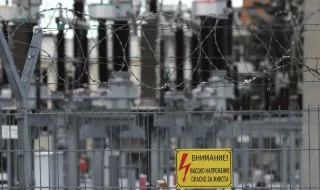
September is over, and with it the summer. No matter how you look at it, the summer of 2026 will be remembered as quite difficult - heat, drought, dry rivers and stopped nuclear power plants - for the European energy sector. So we should take a breather. Yes, but no. Because even September, which is generally characterized by low consumption and correspondingly low prices, ends with extremely unpleasant results.
I would like to take this opportunity to remind you that the leading share (37.4% for 2024) in final energy consumption in the EU is held by petroleum products - diesel, gasoline, kerosene, etc. Diesel is the most important fuel in the economy and the main driver of inflation. Its average final price in the EU has jumped by 43% compared to September 2025. This also includes the effect of the panic reduction of taxes and excise duties in many EU countries, including Germany.
Electricity comes in second place. Unlike July and August, the weather in September was relatively normal, so the total production and consumption of electricity for the month did not change significantly compared to 2025. Despite significant investments in renewable energy and batteries, however, the total production of renewable energy increased by only 3.1% on an annual basis. The sun is growing a lot, but declines in hydropower and wind farms neutralize it. At the same time, nuclear power production decreased by 13%. Despite political mantras and high prices for gas and carbon quotas, fossil fuel thermal power plants reported serious growth: gas +17.3%; black coal +39.7%; lignite +22.2%. The most significant role in this result is played by Germany, which reported several episodes of wind calm, when all available lignite thermal power plants had to operate at maximum capacity.
There are no significant changes in electricity trade compared to 2025. The major exporters remain the nuclear powers France and Sweden. However, the Czech Republic (nuclear power plants and coal) and the Netherlands (gas and coal) displace Norway (hydroelectric power plants) from third position. Great Britain, Italy and Belgium remain large net importers, while Germany still reaches net exports. The Iberian Peninsula remains a net importer. In the Balkans, Bulgaria and Greece again dominate exports.
Despite the strange color code of the graphs, which shows September 2026 in greener colors, average prices on the “Day Ahead“ market jump by about 78% compared to last year. There is a large increase even compared to the hot August. Only in September 2022 have we reported higher electricity prices. The most expensive is electricity in gas-dependent Italy and Ireland, as well as Hungary and Romania, which were hit by the dried-up Danube. In general, in the EU we report wholesale electricity prices that are about 4-5 times higher than those in the USA and absolutely incomparable with China.
A look at natural gas prices (a jump of about 150% in a year) shows the main reason. Although it provides only 15.5% of all production, gas plays a crucial role in the electricity market. If we add an increase of about 10% in the prices of carbon quotas, which affect both gas and coal-fired power plants (to a much greater extent), we get the explanation for the high prices of electricity.
I stick to natural gas, because it is used for energy and directly for many other economic activities - industry, heating, cooling, transport. Gas is also behind a huge share of what is reported as “thermal energy“ in final energy consumption. Additionally, it serves as a raw material for the chemical and fertilizer industries. At average prices for September, each consumer in the EU again pays about 9-10 times more for gas than the average consumer in the USA. In Canada and West Texas, they pay about 15-20 times less.
Again, I remind you that we are talking about September - a month with relatively low energy consumption. The cold is yet to come, the sun will shine for shorter periods, the rivers will remain at low water, the wind is unpredictable, nuclear power plants will be out in large numbers for scheduled repairs and refueling, and European gas storage facilities are at a record low - only 71.5% full as of today.
This is the current situation. The culprit, of course, are all the external evil forces that are plotting a global conspiracy to destroy our wonderful new European world - especially Putin, Trump, Jinping, far-right alternatives, sheikhs and ayatollahs...