Americans have a colorful expression for a president who is already entering the last stage of his mandate or is in a weak political position - and from whom, therefore, not much can be expected: "lame duck".
At the meetings of the European Council, there is often no shortage of such "lame ducks" among the 27 members. Usually this does not have serious consequences. However, the situation becomes problematic when someone from the heavyweight category in the EU falls into this category, writes the Spanish newspaper La Vanguardia.
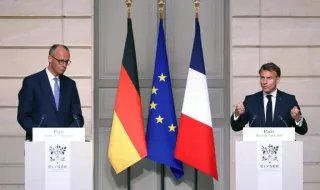
If the leaders of the two driving forces of the Union - Germany and France - simultaneously turn out to be "lame ducks", the situation threatens to lead to catastrophic paralysis. And this is a cause for concern at a time when Europe is facing decisive debates. French President Emmanuel Macron has been limping for some time, ever since his ill-advised decision in 2025 to call early elections left him without a majority in the National Assembly and turned the final two years of his presidency – his term ends in 2027 and he is not eligible to run for a third – into a period of constant turmoil. Worse still for his political legacy, his party faces the risk of being completely crushed in the next presidential election, where the front-runner is veteran far-right leader Marine Le Pen of the National Rally (RN).
Compared to Macron, German Chancellor Friedrich Merz once seemed much more stable. That is no longer the case. The leader of the Christian Democrats seems to have squandered all his political capital in less than a year and a half at the helm of the federal government: not only has his popularity plummeted to critically low levels (14%), but he has also dragged his party, the Christian Democratic Union (CDU), into a deep existential crisis. In the last two regional elections, the party suffered a crushing defeat at the hands of far-right forces - including outspoken neo-Nazis - from the Alternative for Germany (AfD); moreover, for the first time in history, it failed to overcome the 5% threshold required to enter the state parliament (in Mecklenburg-Western Pomerania).
Both countries are facing serious economic difficulties. Germany's entire industrial strategy of recent decades - built on the import of cheap Russian gas and large-scale exports to China - is collapsing. A recent report by the European Central Bank (ECB) shows that Germany is the European country most affected by growing Chinese industrial competition: not only has the volume of its exports to the Asian giant fallen (from 3.1% of GDP to 1.5%), but China is competing fiercely in key sectors for it - mechanical engineering and automotive. Today, Chinese electric cars are flooding the market, and the German sector is announcing mass plant closures. Moreover, despite solid public finances - with a budget deficit of 2.7% and an exceptionally low debt level of 63.5% - economic growth remains weak after two years of contraction, while inflation has reached 2.9%.
The French economy is doing better, but there is still little reason for optimism. Economic growth is close to stagnation, unemployment remains high (8.3%) and inflation (2.6%) is felt most strongly in fuel prices, which is fueling social discontent. Against this background, the government of Prime Minister Sébastien Le Corneille faces the difficult task of passing next year's budget. The aim is to introduce measures to strengthen public finances totaling 54 billion euros (through a combination of spending cuts and tax increases); these measures will only keep the budget deficit at 5% - well above the 3% threshold, although Paris has so far avoided official sanctions - and stabilize public debt at 121.7% of GDP. This is double the level in Germany (it is worth noting that France currently pays higher interest on its debt than Greece).
Unlike France, which faces crucial presidential and parliamentary elections in May, Germany does not have a federal election in the near future - the next one is scheduled for 2029. However, the upcoming regional elections could further weaken the Christian Democrats' position unless the party changes course. For now, the coalition government with the Social Democrats remains stable, although it is unclear how long that will last without a significant change in direction. While Merz has clung to his post and his reform agenda, discussions are already underway within the CDU about replacing him as the party's candidate for chancellor.
The weakness of the Merz-Macron tandem does not bode well for tackling the key challenges facing Europe. The most pressing of these – if only one can be named – is the approval of the EU's budgetary framework for the period 2028-2034. This framework will define the real scope of the EU's ambitions, and many leaders would like to reach an agreement before the end of the year, given the key elections coming up next year in France, Spain, Italy and Poland. Other pressing issues include the formulation of a single industrial policy promoting the "Made in Europe" principle (with the review of trade relations with China posing a serious challenge), as well as the implementation of measures from the Draghi and Letta reports to increase the competitiveness of the European economy (especially with regard to the Capital Markets Union), without significantly undermining the "Green Agenda". Also on the agenda are the introduction of a genuine European defence policy - by abandoning the currently dominant national approach - and the continuation of military and economic support for Ukraine, alongside the complex task of EU enlargement.
The debate on the EU budget threatens to be very heated - and indeed already is. Germany has so far abandoned any moderate position and heads the group of so-called "frugal" countries (Austria, Finland, the Netherlands and Sweden). These countries categorically reject the European Commission's proposal for a budget of €2 trillion for the period. Chancellor Merz is pushing for cuts of hundreds of billions across all budget lines, while refusing to approve new sources of revenue at EU level (known in Brussels jargon as "own resources") or to restructure and extend the term of the common debt originally taken on during the COVID-19 pandemic. They are opposed by the so-called "Friends of Cohesion" - including Spain - who reject any cuts to cohesion funds or the Common Agricultural Policy (CAP).
The series of consultations held by European Council President António Costa in European capitals has so far only highlighted the huge gap between the different countries and the difficulty of reaching a compromise. In an attempt to find a solution, some have proposed significant cuts to the EU's own operational expenditure and to the external cooperation budget (the "Global Europe" programme), but none of these measures is enough to solve the equation.
In these circumstances, the role that Friedrich Merz ultimately chooses to play will be decisive. About a year ago - in the summer of 2025 - the German Chancellor pledged to step up the country's foreign policy activity and promised increased leadership within Europe. "We are taking on greater leadership responsibility as a reliable partner in Europe and around the world", he said at the time. The key question is whether he will continue this course of action, or prioritize national interests and domestic policy issues. The immediate future of the EU depends on his actions.
Source: news.bg