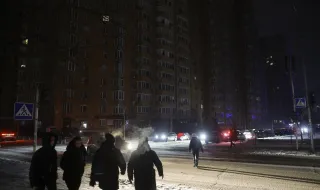
On the night of September 30, the Russian army carried out the first massive combined attack on the Ukrainian energy infrastructure since the end of the last heating season. There were separate such attacks throughout the summer, but as the cold season of the year approached, Russia intensified them. In October, large-scale Russian attacks on Ukrainian energy infrastructure became regular.
On October 14, one of the largest strikes since the start of the war against Ukraine was carried out, and five days later, Russia launched 16 ballistic missiles and more than 200 drones, hitting 28 substations and other energy facilities and leaving at least 550,000 households without electricity, President Volodymyr Zelensky said.
In total, Russia attacked energy infrastructure more than 2,000 times from mid-July to mid-October, Prime Minister Serhiy Koretsky said. A number of regions are experiencing power outages. The government says the country is better prepared for winter than ever before. At the same time, analysts from the Ukraine Facility Platform (UAFP) organization warn in their report that this winter will be harder for Ukrainians than the previous four.
Is Ukraine better prepared for winter than a year ago?
Energy expert Gennady Ryabtsev disagrees. He tells DW that in absolute terms the situation is indeed better than a year ago: Ukraine has restored more facilities, has accumulated coal and gas reserves, and has reserves. In addition, according to him, forecasters predict a warmer winter. “Yes, winter will definitely be associated with restrictions and interruptions in energy supply. But we will survive it just like we survived previous winters," the expert believes.
Gas reserves in Ukraine's storage facilities are already over 16 billion cubic meters, which is the highest figure in 2020, Naftogaz CEO Serhiy Fedorenko told Reuters in an interview. For comparison, last year, at the beginning of the heating season, there were less than 14 billion cubic meters in storage facilities, while the government-established minimum is 13.2 billion. In addition, the company has contracted one billion cubic meters of imported gas for the period from December to March.
Fedorenko also said that since the beginning of the year, Russia has carried out over 400 attacks on Naftogaz facilities, which is twice as many as last year. “We are strengthening defenses and strengthening positions”, Fedorenko told Reuters.
Five factors that could affect the energy situation
UAFP analysts are less optimistic. In their report, they name five factors that could complicate the heating season. The first is new weapons. Russia has switched to testing jet drones, and interceptors that previously shot down over 90 percent of targets can no longer cope with them. According to Volodymyr Zelensky, air defense systems destroy only 55 percent of jet drones.
Ballistic missiles are even more worrisome. According to Ukrainian intelligence, Russia can produce over 200 cruise and ballistic missiles per month. The second factor is related to new targets for strikes. Russia is now attacking not only the autotransformers of the main substations, but also the reinforced concrete shelters above them, using ballistic missiles and jet drones. “This is a task for which this protection is not and could not be designed“, analysts emphasize.
In addition, massive attacks with dozens of drones against one object can destroy the exposed switchgear, even if the transformer itself remains intact. The most vulnerable objects are considered to be nuclear, thermal and hydropower plants, which are less protected than the objects of “Ukraenergo“.
The third factor is “alarm as a weapon“. The waves of Russian jet drones during the day have actually turned the air alarm itself into a tool for influence. In September alone, repair crews were unable to work on open sites for more than ten days to restore damaged networks.
The fourth factor is the “low consumption trap“. Due to strikes on industrial enterprises and the shutdown of metallurgical plants, the energy system now consumes about one-fifth less electricity than it did a year ago. This creates an impression of stability, but winter demand from the population will increase.
Analysts believe that the Kremlin is using the attacks on energy infrastructure as a tool for pressure and blackmail, including hoping to use the temporary cessation of attacks as a bargaining chip in the course of negotiations. The peak of these attacks is predicted for January - the coldest month of the year, when Russia may concentrate attacks on the heat, water and electricity supply systems of major cities in southern Ukraine and on the left bank of the Dnieper.