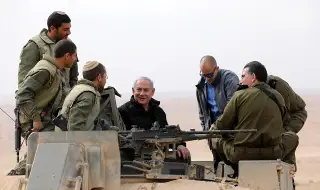
The war between Israel and Iran seems to be over - at least for now. Both countries declared victory in the 12-day conflict, but both expressed readiness to take up arms again if the enemy starts to show aggression.
US President Donald Trump entered peacemaker mode by declaring a ceasefire between the two Middle Eastern countries, but it was violated almost immediately, provoking his displeased reaction.
In the end, however, at least for now, it seems that the active exchange of air strikes will stop at least for a while. The question is for how long.
The answer to this question is directly related to the issue of the Iranian nuclear program. Israel motivated its strikes precisely by the danger that Tehran would soon acquire nuclear weapons.
And although Prime Minister Netanyahu has now announced that his country has achieved a "historic victory that will be preserved for generations", it is not at all certain how severe the damage to Iran's nuclear program is.
"After the attacks on June 21-22 on the Iranian nuclear program, there are contradictory and often incomplete data on the actual damage. As we know, the main focus of the strikes was on key sites such as the underground facility in Fordow, the enrichment center in Natanz and the nuclear facilities in Isfahan. The International Atomic Energy Agency (IAEA) has confirmed that there is significant damage to infrastructure, especially in Natanz, where power supply and underground facilities have been affected, and satellite images show destroyed above-ground structures," commented Ruslan Trad, an analyst, researcher at DFRLab and co-founder of the journal for current military conflicts De Re Militari, for News.bg.
According to him, a full assessment of the damage from the Israeli and American strikes on Iran's nuclear program will take time, as access to the sites is severely limited, and most of the critical infrastructure is located underground.
"There are indications that the centrifuges in Fordow have been damaged by the vibrations of the strikes, but it is not clear whether the main underground halls have been seriously affected. There are also concerns about possible contamination, but at the moment there is no data on a serious radiation risk. The key question remains whether the highly enriched uranium stockpiles were affected, as there is no confirmation of their destruction or removal," Trad commented.
According to him, however, as far as the long-term consequences are concerned, even with severe damage, Iran has the technological and human capacity to restore its nuclear program within a few years, especially if it decides to distribute production to more and smaller sites.
"Assessments at this point indicate that the program has been delayed by months, not years," he said, adding that Iran is on the verge of being able to produce a nuclear weapon.
The country has all the necessary technical and material prerequisites for this, and the White House officially states that if Iran's supreme leader makes a political decision, Tehran could produce a nuclear weapon within "a few weeks".
According to Ruslan Trad, the Islamic Republic is currently already has the uranium needed for weapons and only the process of completing the enrichment and the so-called "weaponization" - the conversion of enriched uranium into a warhead - remains.
"Iran has between 400 and 600 kilograms of uranium enriched to 60%, which is enough to produce between six and ten nuclear warheads if this material is further enriched to 90% - the level needed for weapons. The technological time to go from 60% to 90% enrichment is relatively short - within weeks, and according to some estimates - even less than two weeks," the analyst points out.
However, he points out that even with sufficient material, the question remains of the time it will take Iran to develop and integrate the weapon itself. This is a process that includes miniaturization, ballistic delivery systems, and technical testing.
"Estimates on this issue vary, with some Western intelligence agencies believing that "weaponization" could take between several months and a year if Iran decides to speed up the process as much as possible," Trad said.
According to him, at the moment all signals from the US indicate that Washington will seek to establish peace and the American president is not planning a prolonged military campaign. At the same time, however, in his public statements Trump does not rule out the possibility of new strikes if Iran does not show "an inclination towards peace" or if it responds with escalation.
"The American military and political leadership does not want to expand the conflict, but at the same time maintains a high level of combat readiness in the region and does not rule out further strikes if circumstances require it. This means that at this point, the deployed military forces have not been withdrawn, nor has the number been reduced - both the US and European forces such as Britain and France," the expert commented.
According to him, if Tehran refrains from a large-scale military or terrorist response, the US will likely limit its actions to diplomatic and economic pressure. However, if there is a serious Iranian escalation against American or allied targets, the risk of new strikes remains real.
Trad points out an important point about American involvement in the conflict - the idea of involving the United States in a war in the Middle East is extremely unpopular, with even politicians close to Trump against such an idea.
As expected, the military conflict between Israel and Iran creates tension in the societies of both countries, which also helps to end it now.
According to Trad, in Israel, Prime Minister Benjamin Netanyahu finds himself in a "complex dynamic".
"Despite the short-lived "cohesion effect" after the first strikes, the increasing casualties and systemic damage are beginning to undermine his position. Families of the dead and wounded, especially in central areas such as Bat Yam and Ramat Gan, are publicly questioning the government's strategy. These voices join the already existing protests of relatives of hostages in Gaza who insist on prioritizing negotiations over military action," he commented, citing statistics according to which 68% of Israelis believe that the government is failing to adequately protect civilian infrastructure.
The expert also added that there are expectations that anti-government demonstrations in Jerusalem and Tel Aviv, which temporarily subsided after the Iranian strikes, will intensify again, and Netanyahu's critics directly link the casualties to the "failed preventive strategy".
"Netanyahu's internal party rivals, including former Defense Minister Benny Gantz, are using these data to emphasize the need for "strategic adjustment". Attempts at a vote of no confidence in the Knesset have not yet succeeded due to coalition ties, but polls show that Netanyahu's popularity among the right has fallen by 15%," Ruslan Trad points out.
At the same time, Iran is facing an extremely complex situation in which voices are beginning to be raised against the ayatollahs' regime and against the supreme leader - Ayatollah Ali Khamenei.
"There are reports that active discussions are taking place in Tehran itself about the possible removal of Khamenei, involving businessmen, military men, politicians and even clerics. Similar signals exist from different parts of the country, but attempts at a broader conspiracy have been thwarted so far. "The chances of replacing the supreme leader have increased, but there is still considerable uncertainty and concerns that such plots could backfire on their initiators," Trad points out.
He explains that since the beginning of the Israeli strikes, Iran's supreme leader has been hiding in an underground bunker in Tehran, from where he communicates with the outside world only through one person, who is his intermediary with the rest of the senior leadership.
Khamenei suffered a serious blow to his power after many of his closest associates, including key commanders of the Revolutionary Guard, were killed. This has further shaken the command structure and made it difficult to find effective replacements, which only adds to the feeling of a vacuum in the top leadership, which is unprecedented in recent decades, the expert commented.
However, according to him, despite these signs of instability, the system of governance in Iran is built in such a way that it can maintain control and prevent a rapid collapse, even if the regime's institutions weaken.
"In addition, replacing experienced commanders with more docile figures can temporarily consolidate power and allow for a new course that balances military resistance and diplomatic maneuvers. The historical experience of the Iranian leadership shows that it is inclined to seek a negotiated solution when faced with an existential threat, but this decision often comes after a period of tough confrontation," Ruslan Trad also says.
If nothing else, the Israeli and US strikes on Iran have shown that Tehran cannot count on the categorical support of its allies.
Turkey has called for international support for Iran among Muslim countries, Russian President Vladimir Putin has announced that he will support the Iranian people, and China has criticized the US attacks, but these statements have largely exhausted the aid for Tehran.
"Despite the categorical statements of Turkey, Russia and China in support of Iran after the American and Israeli strikes, the real external assistance to Tehran from Moscow at the moment remains mainly at the level of diplomatic and political gestures, rather than concrete actions with military or economic effect", Trad also points out.
According to him, both Turkey, Russia and China are refraining from real steps that would involve them in a direct confrontation with the US or Israel, and are rather looking for diplomatic moves and entering the role of mediators.
"Russian representatives do not rule out the possibility of providing assistance, but for now this remains at the level of diplomatic pressure and rhetoric, rather than actual arms supplies or military intervention. Beijing also did not offer any specific material assistance, but limited itself to calls for the restoration of dialogue and the protection of international norms," the expert points out.
According to him, Chinese interests in Iran are economic and strategic, related to energy supplies and the "One Belt, One Road" project, which makes Beijing wary of direct intervention in a conflict that could threaten its global economic interests.
"Let's not forget that China also has long-term investments in Israel, where Chinese companies operate the ports in Haifa," adds Ruslan Trad.