Comment by Georgi Lozanov:
With the resignation of Kiril Petkov, a period ends - I would call it romantic-experimental, in the political representation of the democratic community in our country. Briefly followed as part of our most recent history, it begins with the anti-corruption protests in 2020, which were largely surprising against the backdrop of the carefully cultivated resignation with the status quo. But Covid brought back to Bulgaria many young people with European thinking, and Hristo Ivanov gave a concrete stimulus by docking at the beach “Rosenets“ illegally appropriated by Ahmed Dogan. The symbolic message of his action was that the citizens' patience had already run out and it was time to take back the state they had appropriated.
For the protests to make sense, however, politicians must transfer their energy to the institutions through elections, which they purposefully or out of vanity prevented each other from doing. The fighters against the status quo suddenly turned out to be so numerous that the situation was reminiscent of the one after September 9, when far more partisans came down from the mountain than came up. The vote, which according to their historical and ideological genealogy should have belonged to the DB, was scattered and the democratic community, despite its civic upsurge, was once again left without a clear party representation. This opened a niche for a new political entity, where exactly "We Continue the Change" appeared and quickly became the first parliamentary force with the task "assigned" to them by the streets to deal with corruption. Their political father was considered to be President Radev, who at that time was an ardent critic of the status quo.
Amateur improvisations and reconciliation with the status quo
In an attempt to deal with corruption in Bulgaria, the PP, in direct interaction with the DB, went through three stages: a "life and death" battle with the status quo, reconciliation with it, and opposition to its reformatted majority in the current parliament. The banner of the battle was supposed to be the arrest of Boyko Borisov, which, however, turned into a heavy own goal because it showed that the new politicians on the right would rely more on amateur improvisations than on professional training. And this, in addition to permanently entering their public image, made them waver in their own strength and forced them to seek reconciliation with the status quo.
Thus emerged the paradoxical figure of the “assembly“, in which the PP-DB had to stop corruption side by side with those suspected of it. This, even if it were achievable, required precisely their lacking professional agility, which they tried to compensate for with political courage. It became their style to first throw themselves into the deep end and then learn to swim. And after Putin's invasion of Ukraine, the second major problem facing Bulgaria had become actualized, which somewhat brought the PP-DB closer to GERB and even to Peevski - post-Soviet influence.
As its agent, along with the smaller fish, none other than the president of the republic himself had appeared in conflict with the dominant Euro-Atlantic attitudes. It had become urgent to block his ability to shift the geopolitical orientation of the country to the East through his official offices. The leaders of the PP had to stand up to their political “father”, and he had to call them charlatans, visibly angry that they refused to obey him. But, in any case, thanks to his assembly, his powers were curtailed through changes to the Constitution and he could no longer impose his will unhindered. There was even talk that he would create his own party, ready to do what the PP did not want.
Merits of the PP-DB that remained unrecognized
The geopolitical “rehabilitation” However, not only was the president's victory not recognized as a merit of the PP-DB, but the constitutional changes that led to it with the leading role of Hristo Ivanov were subjected to widespread hatred, including by their partners in the assembly. The same happened with their other manifestations of firmness towards post-Soviet influence, such as the expulsion of 70 spies from the Russian embassy in Sofia or the reporting of the presence of "four thousanders" in the media and social networks, for whose activities the Romanian Constitutional Court showed how far it can go. And the contribution of the "Petkov" and "Denkov" governments to entering Schengen and the eurozone was, at best, silently rejected. No wonder that in such a public context the biggest Euro-Atlantic in our country turned out to be the one sanctioned under the "Magnitsky" law Delyan Peevski, not the politicians of the democratic community.
What were the effects of the assembly for society is a long and still unspoken conversation, but for PP-DB it became “total damage“, because it gave their partners a chance to insist that since they are together with them, they are like them and thus take away their initial moral credit. And since everyone has the same morals, the question comes down to who is better at the games, where no one can compete with Borisov and Peevski (not even Dogan, as it turned out).
PP-DB was labeled “impossible”, which is very devastating in a society torn by everyday problems – both real and fictional. This type of image damage can be symbolically called “Peevski's lap” and Hristo Ivanov sacrificially took it upon himself by resigning.
A record that appeared as if on order
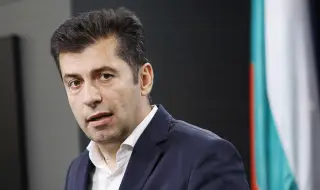
A few days ago, Kiril Petkov followed his example because of the next heavy damage, already in the third stage, when the PP-DB is in opposition to GERB and their current assistants. But, as with the assembly, the PP-DB again had to make compromises with them along Euro-Atlantic lines in order to successfully complete the adoption of the euro. And at the same time, to show them that they were not amnestied at all on the corruption front, and the PP, with its inherent uncontrolled courage, vowed to ask for a vote of no confidence on the issue at the first opportunity, and let whatever happens happen.
The surest way to give up this vote was to get into a corruption scandal themselves - according to the proverb "Whoever takes out a knife, dies by a knife", which Boyko Borisov recalled. And the scandal appeared as if on order with the unchanging anonymous recording. What and whose guilt is in it will be established by justice, but the "opportune moment" at which it arose, as well as the hasty reaction of the authorities, unlike other, significantly more drastic cases, left the feeling of a punitive action with long-term consequences. It will, of course, untie the hands of the beneficiaries of corruption, after those who fight it have been exposed as the problem itself instead of the solution. But it is far more dramatic that the blow to the PP-DB falls on the liberal democracy that they represent in the political spectrum. And this coincides with the overseas attempt to deal with it in Trump's second term, when its defense was taken over by the EU in cooperation with the UK.
The decisive battle is ahead
In other words, the fate of the parties that are the bearers of liberal democracy in our country will determine the degree of our future European integration. The adoption of the euro should not reassure us too much - it is only a necessary side episode on this path, behind which there may also be steps of retreat. The decisive battle will most likely be the presidential elections, which will show whether Bulgaria wants to develop as a democratic European country or whether a historical turn is imminent under post-Soviet influence, and it does not necessarily have to be carried out by openly pro-Russian proxies.