Comment by Georgi Lozanov:
The Bulgarian is gradually losing the greatest privilege that the fall of communism brought him – the pro-European orientation of the country. And without even noticing it, because before the queues, the brigades, the cult of personality, the mandatory barracks, the exit visas, the informers, the camps return … and the loss becomes visible to the naked eye, it is valuable. The loss of belonging to a culture that has developed along the crest of civilization – from Greek and Roman antiquity, through the Christian Middle Ages, the Renaissance and modernity, to liberal democracy. As was the national ideal of our ancestors before the communists came.
Social nostalgia - the first symptom of the catastrophe
In Bulgaria, the loss of this belonging is now happening like in a disaster movie, in which the audience understands what will happen, but the characters are mistaken until the end.
The first symptom of the catastrophe came with social nostalgia, whose worn-out propaganda clichés began to be offered on every corner by collaborators of the former State Security and their like-minded people. They began to repeat that education and healthcare during the social security system were free - as if the population did not always pay for them, only that then the government boasted that it had provided them for them. That there was no crime back then - as if the regime itself had not been declared a criminal, having committed the largest theft of private property in history, called nationalization. That the young people stayed in their homeland - as if if they had opened the borders, the country would not have emptied. And so on, and so on. The viewers in the hall bite their lips with tension as they watch the characters on the screen let themselves be deceived into forgetting their own recent past.
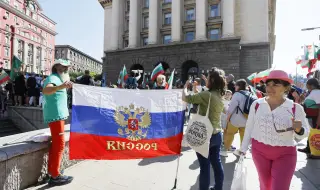
The next delusion presented to the characters was that democracy itself was to blame for the failures of democracy. And not the same criminal regime that quickly transformed itself to continue its large-scale theft and criminalized the public environment. Like the post-Soviet regime in Moscow, of which ours was a pale but faithful copy. From social nostalgia, which is a melancholic attitude, there was a gradual transition to an active restoration of the past… But to those who had recently freed themselves from it, this could not yet be said openly and was hinted at through more overt or covert support for Putin.
The third symptom of the catastrophe was the popularity that brought parties and politicians with pro-Russian Eurosceptic positions into state institutions. From here on, the game got rougher…
The fourth symptom was not just the emergence of policies for the restoration of the totalitarian past, but especially its repressive methods and forms, such as the People's Court or labor camps. Hate speech began to be heard publicly, unthinkable for a democratic society, and for ours until recently. The leader of the most loyal Russian proxy in parliament (later officially "twinned" with Putin's party) threatened his political opponents that he would send them to prison or to a camp in Belene: "Of course, they will have the opportunity to work there and every 2 working days will count as 3 behind bars… Those of them who will be in Belene will not be walked far – they will be able to get directly involved in the completion of the "Belene" NPP. A member of the proxy in question and a former journalist, had stated: "Bulgaria today needs a new September 9th and a new People's Court. A large part of the Bulgarian political, economic and media elite deserves to stand before it". As well as "It is enough to look at some impudent and stupid rich man like Hampartzumyan for just ten minutes to understand why there had to be a People's Court". Everything would have fallen into place if Hapartzumyan had not been Armenian but Jewish, but that's how it happens. More shocking than the statements themselves, however, is that they were no longer only possible, but seemed acceptable. Apart from the reaction of those directly affected by them and the collective lawsuit against the former journalist by the families of the victims of the communist regime, the nation was unable to feel the threat of a new national catastrophe, even though it was pointed out to it in plain text - – – – – – – – a
The fifth symptom of the catastrophe: how we are dealing with the most important geopolitical test of the new century - the attitude towards the Russian invasion of Ukraine. Although with "three hundred dawns", we sided with the victims, but until the return of Trump, who began to advance the aggressor and equate him with his victims: "You have a child and there is another child on the playground, and they hate each other" So Zelensky had to remind him that Putin "is a murderer who came to this park to kill the children". The test became more complicated when the EU (with isolated exceptions such as Orban and Fico) firmly stood behind Zelensky and opposed Trump. It seemed that we were waiting for this - party leaders, yesterday's ardent Euro-Atlantics, immediately became only Atlanticists. The most ardent of them even decided that for the moment it was profitable for him to pretend to be Orban and gave himself up to his battle with the ghost of Soros: "We will free the Motherland from the Sorosoid hydra!" From everywhere in chorus with the Russian proxies they began to predict the end of the EU as meaningless, weak, ineffective… With this militant Euroscepticism, in fact, our retreat from democracy was packaged.
The sixth symptom of an approaching catastrophe - the arrest of the Varna mayor brought citizens out onto the streets. They accepted the arrest as confirmation of their suspicions that the crime-fighting authorities were being used to crack down on the opposition. Civil protests continue, but so do the swarming of symptoms.
The seventh is the court decision, which acquitted the former journalist for his aforementioned defense of the People's Court. Thus, from the "institution of justice" in the state, in addition to similar statements with today's date, the activity of that court used in the massacre of the political and cultural elite of the Third Bulgarian Kingdom is legalized with yesterday's date. The court in 2025, and without being "people's", opens the door to dictatorship. Nothing like this has happened before.
The eighth symptom is the visit to Beijing of a Bulgarian deputy prime minister for a military parade with a threatening demonstration of force in the company of the Russian and North Korean dictators. Attempts to downplay this visit as private are in vain, not only because the deputy prime minister is welcomed on a red carpet and soldiers pay him honor, but because the actions and statements outside the home of the statesmen "conditionally" are a public message. In this case, it is extremely clear and hardly thoughtless: we are no longer looking to the West, but to the East and not to democracy, but to autocracy. Even more so, if it is interpreted as a reaction to the visit to Bulgaria of the President of the European Commission. It is indeed a sign in support of our pro-European orientation, however, the necessary steps were taken to ensure that Bulgarians perceive it as a pragmatic, not a value sign – entirely in terms of interest, instead of, like our ancestors, of the ideal. The discussions revolved around new production, jobs, markets for our military industry, without reaching our political and cultural solidarity with Western Europe. The Prime Minister may have wanted to lead them there, but he is initially in a subordinate role to his party leader.
Despite these eight, and there are others, symptoms of the loss of our pro-European orientation, it can ultimately survive. If the disastrous film suddenly changes genre and the characters on the screen come to their senses. As long as the protests in the streets manage to help them do so.