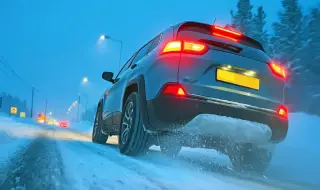
The onset of frosts and snowstorms traditionally puts to the test not only driving skills, but also the most advanced technologies in the automotive industry. It turns out that high-tech driver assistance systems, which in the summer make us feel safe, in the winter can play a bad joke and even become a source of risk.
The main stumbling block for “smart“ machines lies in the drastic change in traction. Experts warn that the complex algorithms that control gas supply, gear shifting and torque distribution are designed to work in optimal conditions. However, when there is pure ice or slush under the tires, these systems often “get confused“. Electronics try to correct the car's behavior according to mathematical models that do not always correspond to the chaotic reality of a slippery road, which can make the car practically uncontrollable in seemingly harmless maneuvers.
Even more worrying is the fact that intelligent software often limits the right to human intervention. In a critical situation, when an experienced driver could master the approach with precise work with the steering wheel or accelerator, electronic "nannies" can block these actions, leaving the person behind the wheel in the role of a helpless spectator. The danger is also increased by purely physical factors - icing of sensors, lidars and cameras. A little wet snow covering the distance sensor is enough to cause the car to either disable all safety systems or go into emergency mode, drastically limiting engine power at the most inopportune moment.
As the industry strives for full autonomy, incidents like the sudden and inappropriate activation of safety features on the Tesla Model X are a reminder that the technology is still vulnerable. In harsh winter conditions, “simpler” mechanical cars that rely on a direct connection between a person and the road paradoxically prove to be more predictable and safe. Before you fully trust the artificial intelligence in your car this winter, make sure the sensors are clean and you – ready to take control at any moment.