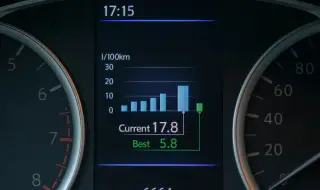
Every driver's nightmare begins the moment the fuel gauge starts to drop at an alarming rate, for no apparent reason. Often, no warning lights are on the dashboard, the engine sounds normal, but visits to the gas station become more frequent. It turns out that there are several “invisible” technical sinners that systematically drain your pocket, while your car seemingly functions properly.
One of the main culprits for the unexpected gluttony is the lambda probe
This small but critical sensor is responsible for precisely regulating the fuel mixture. Over time, it becomes covered with deposits of exhaust gases and additives, which slows down its reactions. The result? The electronic control unit begins to supply a mixture that is too rich, believing that everything is fine. Before the sensor finally "dies" and the Check Engine light comes on, your fuel consumption can quietly jump by 10-15%.
Fuel injectors are no less insidious
Even if you fill up with the highest quality gasoline, varnish deposits inevitably accumulate on their nozzles. Instead of a fine mist, they start spraying fuel in large drops that cannot burn completely. In an attempt to compensate for sluggish acceleration, you unconsciously press the gas harder, which turns gasoline into vapor, literally and figuratively.
The next link in the chain is the ignition system
A weak spark is a death sentence for economical driving. When the spark plugs are worn or covered with carbon, the discharge energy decreases, and the fuel mixture ignites with a delay. This “lazy“ combustion process forces the engine to draw more fuel to maintain the same power.
Sometimes, however, the problem is not under the hood, but at the point of contact with the asphalt
Insufficient tire pressure is a classic example of unnecessary waste. When the tire is soft, its contact area increases, creating greater rolling resistance. Poor adjustment of the front or rear axle has a similar effect – even a slight deviation in wheel alignment can add over a liter to your average fuel consumption per 100 km.
Finally, we must not forget that the engine needs to “breathe“
A full 15 kilograms of air are needed to burn a single liter of gasoline. If the air filter is clogged or the throttle valve is covered with carbon, the cylinders are not filled properly. When we add to this a dirty intake manifold, the air flow capacity drops dramatically. The electronics try to balance the system, but the price for this is always the same - increased fuel consumption and a drop in performance.