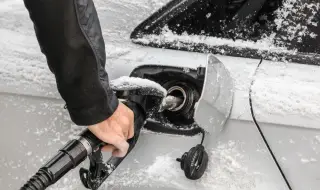
The calendar spring is approaching, but every experienced driver knows that real warming is still a mirage. Cold mornings and sharp temperature amplitudes remain our companions on the road, and with them comes an unpleasant but well-known phenomenon - the fuel gauge drops faster than usual. Even if you haven't changed your route to the office or your driving style, the "appetite" of your car jumps noticeably, which, against the background of gas station prices, is a real blow to your pocket.
Why does the car actually spend more when it's cold outside? The root cause is the so-called cold start. In the first minutes after turning the key, the car's smart computer supplies a richer fuel mixture to warm up the engine faster. Until the engine reaches optimal operating temperature, it works extremely inefficiently. If you drive short distances, you are practically moving in a constant "warm-up" mode, which is the quickest way to high fuel consumption.
Add to this the increased internal resistance. At low temperatures, the oils in the engine and transmission become thick as molasses. The machine has to put in a huge amount of energy just to overcome this friction and "move" its parts. We should not forget the army of consumers: heated seats, windows, mirrors and the constantly running heater load the alternator, and hence the unit itself. Winter tires with their soft compound and higher rolling resistance also add their share to the total bill.
However, is it possible to tame this excessive consumption? Here are a few golden rules that will keep your wallet fuller:
Forget about long engine runs on the spot: Modern units do not need a 10-minute warm-up in front of the block. 30 to 60 seconds are quite enough, then drive off smoothly. On the move, the engine warms up much faster and more economically.
Watch the car's "shoes": Cold compresses the air, which leads to a drop in tire pressure. Softer tires mean more resistance and higher fuel consumption, so check your tire pressure at least once a month.
Plan your logistics: Try to combine several short trips into one longer trip. Once warmed up, your car is much more efficient than five separate starts throughout the day.
Fuel system hygiene: Clean injectors are the key to proper combustion. Using quality additives helps remove carbon deposits and optimize engine performance without requiring a trip to the service center.