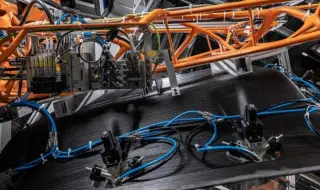
The automotive world is experiencing a quiet but fundamental transformation under the hood. Leading designers are massively abandoning traditional copper conductors in favor of aluminum alloys. This strategic move is dictated by two main factors that excite every modern manager: the feverish pursuit of lower weight and the desire to control ever-growing production costs. Among the pioneers who are already integrating the lightweight metal are iconic names such as Ferrari and BMW, while innovators such as Tesla and Chinese technological leaders XPeng, Xiaomi and AVATR are betting on this solution by default.
The economic logic behind this migration is completely unappealing. Commodity markets have been rocked by an unprecedented surge in the price of copper, which earlier this year approached the psychological threshold of $15,000 per ton. Against this backdrop, aluminum looks like a real salvation with its levels of around $3,100 per ton. When the financial ratio between the two resources crossed the critical threshold for profitability, it became simply impossible for boards of directors to ignore the alternative. JPMorgan analysts predict that this structural transition will shrink global copper consumption by 2% this year, and by the end of the current decade the decline in demand could reach a tangible 6%.
While the financial benefits are obvious, the motivations of some producers are entirely engineering. The Italian legend Ferrari, for example, is implementing aluminum power lines in the architecture of the hybrid sports car 296 as early as 2025. The technology has subsequently been transferred to the rest of the Maranello brand's range, including the first all-electric supercar Luce. Engineers report a reduction in the weight of the cable network by an impressive 15 to 20 percent. For a brand of such caliber, the leading argument is precisely the dynamics and diet of the body, and not so much the optimization of the balance sheet.
The German premium manufacturer BMW has enviable experience in this field, experimenting with aluminum wires for over fifteen years, the beginning of which was quietly laid in the BMW 1 Series back in 2011. With the evolution of electric mobility and the introduction of the sixth generation of the eDrive system, the Bavarians are now relying on the silvery metal for both their high-voltage traction circuits and the standard low-voltage on-board network. It seems that the conglomerate Stellantis is preparing to join this camp, although its management prefers to remain officially silent on the subject for the time being.
Of course, the complete surrender of copper is not coming tomorrow. The laws of physics impose their limitations, since the electrical conductivity of aluminum is only about 61% of that of its rival. To compensate for this deficit and transmit the same amount of energy, the wires require a larger cross-section, which complicates the layout. In addition, the re-equipment of factories and the revision of complex electronic circuits are associated with serious initial investments.
Despite these technological challenges, experts agree that the process is irreversible and will only gain momentum. In the case of electric vehicles, every gram saved means additional kilometers of range on a single charge. In an era of relentless price wars and fierce competition, manufacturers simply cannot afford the luxury of ignoring the opportunity to lighten both their vehicles and their budgets.