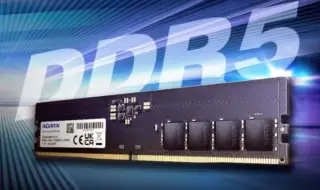
The global technology market is facing a serious test that will directly affect end users and electronics manufacturers. The Taiwanese giant ADATA Technology has issued an official position warning of an upcoming wave of serious price increases in semiconductor components and data storage devices. Forecasts indicate that the market will feel the first tangible blow in the third quarter of this year. At the heart of this price shock is the same unabated factor - the large-scale and aggressive purchase of production capacities by the artificial intelligence (AI) sector, which is literally draining the available resources in the industry.
The corporation's CEO Chen Libai revealed that major chip manufacturers have already officially begun to notify their partners of serious adjustments in price lists. According to the released data, in the third quarter of 2026, contracts for the supply of random access memory (DRAM) will jump by between 20% and 30%. The situation with non-volatile flash memory (NAND Flash) is set to be even more difficult, with the increase expected to reach levels of 35% to 40%. While the increase in DRAM prices will affect absolutely all existing categories of hardware, with NAND Flash, the most affected will be mass-produced solid-state drives (SSDs) and a wide range of consumer electronics.
ADATA's analyses show a profound structural change in the distribution of factory capacities. Large conglomerates in the sector are redirecting their equipment to high-tech components for servers and AI infrastructure, cutting quotas for ordinary consumer products. This trend is expected to deepen significantly next year, turning memory into a highly scarce and expensive commodity for the end buyer.
In an attempt to protect itself from market shocks and ensure some stability, the Taiwanese company has taken a strategic move, signing long-term fixed supply contracts with the three main pillars of the industry - SK Hynix, Micron and Samsung. Despite these preventive measures, global forecasts remain gloomy. The data indicate a possible jump of 50% within the third quarter, followed by an additional 40% growth in the last quarter of the year. These indications also overlap with internal market sources, according to which the South Korean leader Samsung has already begun to prepare its counterparties for a jump of about 20% in DRAM components for the same summer period of 2026.
Independent experts and market observers add that there is no way out of the current situation in the short term. Chronic shortages and high price levels are expected to persist at least until 2028. The only scenarios that could balance the market are a possible slowdown in the pace of development of AI technologies or an accelerated commissioning of new silicon wafer factories, which, however, requires huge investments and technological time.