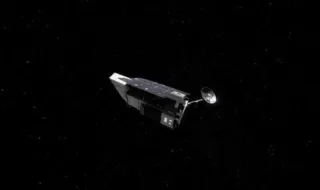
Engineers at the US space agency have made an extraordinary technological breakthrough in fine-tuning the optical systems of the Nancy Grace Roman Observatory. Although the device is still traveling to its final destination and has been in outer space for only a month and a half, the preliminary calibration results have exceeded the wildest expectations of specialists. The clarity and focus of the images turned out to be nearly a third better than the original design specifications, which guarantees revolutionary precision in future deep space research.
The main focus of the latest engineering activities fell on the wide-angle instrument, known as the Wide Field Instrument, or WFI for short. This powerful infrared module has an impressive array of 18 detectors, the total resolution of which reaches an impressive 300 megapixels. During the tests, the expert team subjected the control electronics, the optical filter mechanism, the built-in thermal control system and the calibration LEDs to serious tests. Thanks to the specialized filter wheel, the telescope will be able to successfully isolate specific wavelengths and decompose the light flux into separate spectral components, while the calibration system compensates for minor deviations in the sensitivity of the sensors themselves.
However, the real technical magic lies in the jewelry correction of the mirrors, which remains hidden from the naked eye. The specialists moved the secondary mirror, responsible for transferring light from the primary surface to the detectors, by only one sixteenth of the diameter of a human hair. To get an idea of the scale of this achievement, the experts compare it to changing the height of a huge skyscraper by placing an ordinary coin on its roof. Initial calculations indicated an acceptable optical error of about 90 nanometers rms, but after the subtle intervention, the device reported only 63 nanometers. It is this achievement that provides a thirty percent improvement in the quality of future astronomical images.
In parallel, painstaking work continues on the second key instrument on board - the advanced coronagraph, whose main task will be the effective suppression of dazzling starlight in order to directly photograph distant exoplanets. Engineers are still finalizing the behavior of the deformable mirrors in this section, as the process requires exceptional time and attention.
The Roman space observatory was successfully launched on August 30, 2026 and has been following its trajectory to the strategic Lagrange point L2 for a month and a half, sending its first technical images exactly thirty days ago. Despite the extraordinary progress and the technical standards exceeded, real scientific observations will still have to wait. The device is expected to reach its final position by the end of this year, after which it will undergo the necessary cooling and final calibration processes, and the start of large-scale research programs is planned for January 2027.