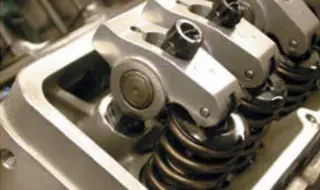
The timing mechanism (TDM) is the heart of any internal combustion engine, responsible for controlling the intake and exhaust valves that allow air to enter and exhaust gases to leave the cylinders. In modern gasoline engines, this system has undergone significant development, far from the simpler designs of the past, offering different configurations, each with its own advantages and disadvantages. With this article, we will try to briefly explain these differences, which are quite important for assessing the performance, efficiency and reliability of the unit.
Historically, the first TDMs were quite rudimentary, often with valves located on the side of the block (side valves or SV), driven directly by a camshaft located in the crankcase. With the development of technology, overhead valve (OHV) engines appeared, where the camshaft remained in the block, but the valves were above, driven by lifters and rockers. These designs are known for their simplicity and compactness, but they limit engine speed and gas flow efficiency due to the longer and heavier mechanism.
The greatest progress was achieved with the introduction of camshafts located above the valves, directly in the cylinder head - the so-called Overhead Camshaft (OHC) design. This configuration significantly reduces the mass of moving parts and allows for more precise valve control at high speeds, which is crucial for modern high-revving engines. Depending on the number of camshafts, OHC systems are divided into SOHC (Single Overhead Camshaft) - one camshaft for the intake and exhaust valves, and DOHC (Double Overhead Camshaft) – two camshafts, one for the intake and exhaust valves.
DOHC systems are considered superior in almost all aspects of performance. By having separate camshafts for the intake and exhaust valves, DOHC allows for optimal valve arrangement in the cylinder head, often with four valves per cylinder (two intake, two exhaust). This provides a larger area for gas flow, which improves the engine's "breathing", leading to higher power and efficiency, especially at high revs. In addition, the DOHC design facilitates the integration of variable valve timing (VVT) systems, such as Honda VTEC, Toyota VVT-i or BMW Valvetronic.
Variable valve timing (VVT) systems are the real innovation in modern timing systems. They allow for dynamic change of valve opening/closing times and/or valve lift depending on engine speed and load. This optimizes cylinder filling in all operating modes, improves torque at low revs, increases power at high revs and at the same time reduces fuel consumption and harmful emissions. An example of the most advanced systems are those that provide stepless valve lift variation (such as BMW Valvetronic), eliminating the need for a throttle valve at low loads, which reduces "pumping" losses.
Which system is "best" depends on the specific requirements of the engine. For maximum performance, economy and low emissions, modern DOHC engines with complex VVT systems and direct fuel injection are the leaders. They offer the greatest flexibility and efficiency over a wide range of speeds. Despite their higher complexity and potentially higher repair costs, their performance and environmental advantages make them the preferred choice for modern cars.