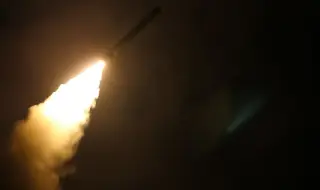
The appearance of "Tomahawk" cruise missiles in Ukraine's arsenal faces several significant obstacles, which complicates the idea of their delivery to Kiev through US partners, notes BBC military analyst Pavel Aksyonov.
First, "Tomahawk" is primarily a sea-based missile — it is launched from ships and submarines. The Typhoon land-based mobile launcher for Tomahawk missiles began to be developed and delivered to ground forces only after the termination of the Intermediate-Range Nuclear Forces Treaty in 2019. This means that the ground-based variant is relatively new and not yet available in large quantities.
Second, the presence of "Tomahawk" in the Ukrainian forces would represent a significant escalation in the conflict with Russia. Such a missile gives the ability to strike distant and strategic targets, which includes areas that would be perceived by Moscow as a direct threat.
The political consequences are also a factor. The Joe Biden administration has long been wary of supplying weapons that could lead to escalation — this partly explains the delays in decisions on M1 Abrams tanks, ATACMS ballistic missiles or F-16 fighters. At the same time, the leadership of the current US administration claims that its goal is to end the war, not to escalate it.
Some analysts warn that the mere promise of supplying "Tomahawk" could have foreign policy value as pressure on Moscow — without the actual transfer of weapons, Washington retains the "negotiation argument". Turning the potential threat into an actual delivery would deprive the United States and its allies of this tool.
Last but not least: the original Tomahawk variants were also designed to carry nuclear warheads. Today, the United States does not operate “nuclear” Tomahawks in its forces, and Ukraine does not have nuclear weapons. However, for many countries, the transfer of missiles that could theoretically carry a nuclear warhead raises additional concerns, given the ambiguous formulations of Russia’s nuclear doctrine and the risk of uncontrolled escalation.
Taken together, these technical, military, and political factors explain why the Tomahawk issue remains controversial and why decisions on it are made with great care.