Ukraine has resumed gas imports via a pipeline running through the Balkan Peninsula via Greece to support its heating and power systems in the winter after serious damage caused by intensified Russian attacks, Reuters reported, BTA reported.
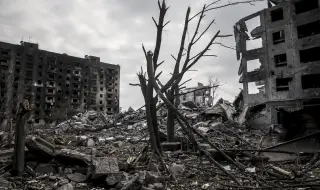
Russia stepped up attacks on Ukraine's gas sector in October, cutting off at least half of its own gas production, forcing it to import an additional 4 billion cubic meters of gas to make up for the shortfall.
Data from the Ukrainian gas transit operator from today showed that Ukraine will receive 1.1 million cubic meters of gas via the Trans-Balkan Corridor, after importing 0.78 million cubic meters a day earlier. This route connects Ukraine to liquefied natural gas (LNG) terminals in Greece via Moldova, Romania and Bulgaria.
Greek gas supplier DEPA Commercial, Ukrainian energy company D. Trading, a subsidiary of Ukraine's largest private energy company DTEK, and Swiss Axpo Trading have booked gas import capacity from Greece to Ukraine of 0.6 million cubic meters per day, according to oil and gas analysis and consulting agency EKSPRO Consulting. (EXPRO Consulting).
Ukraine currently imports a total of about 23 million cubic meters of gas per day, including approximately 10 million cubic meters from Hungary, about 8 million from Poland and 5 million from Slovakia.
The Trans-Balkan corridor was not used in September and October, and before that - only in July and August. The pipeline was not used due to the high cost of gas transit through the four countries and Ukraine. However, tariff cuts by Moldovan and Romanian operators have spurred greater interest in booking capacity in November, reports "EXPRO Consulting".
High pressure in gas pipelines is needed, and imports via the Trans-Balkan Corridor are one way to help the Ukrainian system remain operational when domestic production is unable to provide enough gas to maintain the flow in the pipeline.
According to Oleksandr Kharchenko, director of the Center for Energy Research in Kiev, the Russian attacks have damaged a significant number of gas compressors, which complicates the restoration of the energy system.
"We will not (be able to) restore between 30 and 40 percent of the destroyed capacity during the heating season because the compressor stations have been destroyed," Kharchenko said during a televised briefing.
He added that the compressors for the gas system are expensive even under normal conditions, and are currently unavailable on the world market due to the huge demand.
"(Gas) production has been affected, and restoring the compressors is not a matter of (a few) months. It will take between 15 and 18 months to restore production," Kharchenko added.