The protests in Iran seem to be more widespread than ever, and the government's repression is increasingly cruel, writes the American newspaper "New York Times".
The publication quotes experts and analysts according to whom the regime and the 86-year-old Supreme Leader Ayatollah Ali Khamenei consider the protests an existential threat and have responded with force to protect the government and their own institutional interests.
Although many would like these protests to overthrow the regime, as the Shah of Iran was overthrown in 1979, this could hardly happen, notes the "New York Times". Experts say the government is likely to quell the current unrest, although it may not be able to contain the public discontent in the long term.
US President Donald Trump has repeatedly threatened to use military force if the government in Tehran continues to kill protesters, the "Washington Post" reports. Other options considered by the US head of state may include increasing economic pressure on the government, cyberattacks and increased support for the protest movement, the publication notes.
Despite the public threats, however, Trump has been more reserved in private conversations, the American metropolitan newspaper commented, citing sources in the White House. According to some sources, he is less enthusiastic than before the bombings in Iran last June.
Unlike Trump's first term, when some of his national security advisers espoused ideas close to foreign interventionism, in line with Republican foreign policy, most of the president's current advisers are less inclined to the country's intervention in the Middle East, the "Washington Post" notes.
The truth is that the American president has quite limited options for providing assistance to the protesters in Iran, especially considering the fact that the history of American interventions in the region can hardly be called successful, writes the British newspaper „Guardian“.
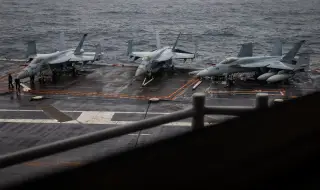
The United States has not had aircraft carriers deployed in the Middle East since October, after transferring the "Gerald Ford“ in the summer in the Caribbean Sea as part of a military buildup off the coast of Venezuela, and in the fall, the "Nimitz" returned to a port on the US west coast, the publication points out.
This means that any potential air or missile strikes against targets in Iran, or perhaps even against Khamenei, will have to rely on US and allied air bases in the Middle East, the "Guardian" commented. An alternative would be similar to the June mission against the underground Iranian nuclear facility in Fordow with B-2 bombers, the publication notes.
In fact, any bombing would hardly be able to stop the repression in the streets, writes the British newspaper „Telegraph“.
The publication points out that, according to analysts, if they want to help the protesters overthrow the government, the United States should be prepared to send troops to Iran.
American strategists probably hope that a possible intervention or even the threat of it will convince the regime to change course - to ease the repression of the protesters and conclude a new nuclear agreement, the newspaper comments.
However, some experts warn that the United States may have waited too long to take actions that could tip the scales in favor of the protesters, the „Telegraph“ notes. “The US may have missed the moment. If they were going to react, they should have done so a few days ago“, says Sanam Vakil, director of the Middle East and North Africa program at the British think tank “Chatham House“.
“At the moment it looks like the regime will survive unless something happens that we don't expect. It's important to remember that we don't have a clear picture of what's going on in Iran. But so far, it seems like they're doing it - in the bloodiest way“, concludes the expert, quoted by “Telegraph“.