Kremlin spokesman Dmitry Peskov made a statement in which he hinted that the Kremlin is using its participation in the ongoing negotiations with the United States to prevent a significant increase in US pressure on Russia, which could hinder its military efforts.
On January 24, Peskov said that Trump's "impulsive" methods in the field of foreign policy do not correspond to those of Russia and that the Kremlin views these methods as designed to force others to "obey".
This was commented on by the Institute for the Study of War (ISW).
Peskov said that those who "obey" to Trump, "they will continue to obey" and that Russia will not disobey Trump.
Since February 2025, the Kremlin has sought to maintain a balance between demonstrating strength to its population and allies and engaging the United States sufficiently to avoid further American pressure that could force Russian President Vladimir Putin to compromise his initial military goals and engage in meaningful negotiations to end the war.
Peskov's open criticism of Trump's foreign policy and his assertion that Russia should not compromise in the face of US pressure suggest that the Kremlin is seeking to ensure that the Trump administration will not impose additional restrictive measures directly against Russia.
Peskov's statement may be a tacit admission by the Kremlin of Russia's vulnerability to increased pressure.
ISW continues to believe that the West, including the United States, has failed to refute Putin's theory of victory and that the Kremlin has not given no signs of a willingness to compromise.
The United States and Europe may be able to refute Putin’s theory of victory and force Russia to make concessions through additional pressure, such as increasing Ukraine’s military capabilities, imposing sanctions and confiscating Russian assets abroad, and restricting Russia’s access to the resources needed to sustain its long-term military efforts.
Kremlin officials continue to reiterate Russia’s commitment to its original military goals and reject Western security guarantees for Ukraine, amid continued reports that talks will resume in the coming days. Two U.S. officials told Politico on Jan. 24 that the Ukrainian and Russian delegations will meet again in Abu Dhabi on Feb. 1.
U.S. Special Envoy for the Middle East Steve Witkoff said on Jan. 24 that the trilateral talks between Russia, Ukraine, and the United States in Abu Dhabi had been "very productive" and confirmed that the delegations planned to continue the talks next week.
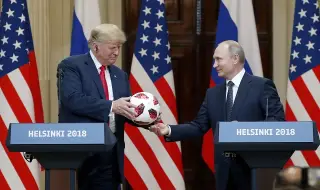
On January 24, Russian Deputy Foreign Minister Sergei Ryabkov reiterated Russia's commitment to the alleged "fundamental agreements" that the Kremlin said were reached between Russia and the United States at the U.S.-Russia summit in Alaska in August 2025.
Kremlin officials have repeatedly taken advantage of the lack of clarity about the results of the August 2024 Alaska summit to obscure Russia's efforts to obstruct the peace process and to claim that the summit reached a common understanding and agreement between the United States and Russia to end the war in Ukraine, despite the lack of clear joint results or a communiqué.
The Russian Ministry of Foreign Affairs (MFA) released an interview with Alexei Polishchuk, Director of the Second Department of the Commonwealth of Independent States (CIS), in in which he reiterated Russia's commitment to resolving the so-called "root causes" of the war, which Polishchuk defined as Ukraine's neutrality and non-nuclear status, restoring protection for ethnic Russians and Russian-speakers in Ukraine, overthrowing Ukraine's current government, and resolving "security threats" against Russia - all of which are a restatement of elements of Russia's original military goals.
Russia continues to step up its recruitment efforts for Russian unmanned aerial systems (USF), which can also be used in conventional Russian ground forces.
The Russian newspaper "Kommersant" reported on January 22 that the Russian Ministry of Defense (MoD) has launched a federal recruitment campaign for contract soldiers in Russia's drone units.
"Kommersant" reported that the Russian Defense Ministry is offering one-year contracts, which state that the Defense Ministry can only assign the recruits to drone formations, cannot transfer them to units such as the infantry, and must discharge them from service at the end of the initial contract if the recruits refuse to sign a renewal contract.
Russian Defense Ministry officials told "Kommersant" that the Defense Ministry is looking for young candidates with analytical skills, computer knowledge, good motor skills and vestibular stability, giving priority to technology specialists and students.
However, other reports indicate that the Russian Defense Ministry may use at least some of the recruits to operate drones in the conventional Russian ground forces.
Russian opposition publication "Astra" confirmed on January 24 that the Russian Defense Ministry is conducting a recruitment campaign at Russian universities starting in mid-January 2026.
"Astra" spoke to students from Russian universities who attended a Russian Defense Ministry recruitment presentation and said that the military department forced students to sign a declaration that they understood that the contract was for one year and that they could leave after one year of service.
"Astra" reported that the Moscow Higher School of Economics confirmed in a separate response to a lawyer that Russian students were not signing a special contract for combat drone operators, but a standard contract with the Defense Ministry.
"Astra" reported that the lawyer said that this standard contract could allow the Russian military command to send these recruits to the infantry and land them on the front, possibly keeping the students in the army even after the one-year contract expires.
ISW has previously assessed that the Kremlin is trying various means to increase the recruitment of recruits to compensate for high losses at the front, which includes using the need to protect critical infrastructure as a weak excuse to cover up broader efforts to prepare active reservists for deployment.
The Kremlin has also concentrated its efforts on partial forced mobilization in the central regions of Russia to protect larger and more politically sensitive population centers, such as the city of Moscow, from efforts to forcibly form new combat units for the front in Ukraine.