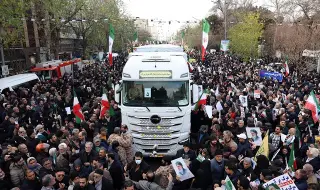
The number of victims in the ongoing suppression of protests in Iran varies widely - from about 3,100 people according to state media to over 30,000, according to independent sources and medical specialists. Verification of the information is greatly difficult due to the almost complete shutdown of the internet in the country, which has now been going on for four weeks, Euronews writes.
The US-based organization Human Rights Activists News Agency reported on Tuesday that at least 6,126 people have died, according to confirmed data from its network of activists in the country. Among them are 5,777 protesters, 214 pro-government forces, 86 children and 49 civilians.
Iranian state television announced last week that 3,117 people had died during the demonstrations. The Martyrs' Foundation said 2,427 of them were civilians and security forces, while the rest were described by the authorities as "terrorists".
Meanwhile, Time magazine reported on Sunday, citing two senior Iranian health ministry officials, that at least 30,000 people had died in street clashes in various Iranian cities. The Guardian published a similar assessment on 7 February, adding that a large number of people were unaccounted for.
Iran's Supreme Leader Ali Khamenei admitted on 27 December that "several thousand people" had been killed, blaming their deaths on "internal and external criminals". He has repeatedly described the protesters as "rebels and terrorists" with ties to the US and Israel.
Iranian surgeon Dr Hashim Moazenzadeh, who lives in France and maintains contacts with medical sources in the country, told Euronews Farsi that at least 22,000 deaths had been recorded, according to hospital and forensic data. He said evidence suggested that security forces had shot at people who were fleeing, with many of the victims being shot in the back. He said that more than 900 bodies had been transported to Tehran's Behesht-e Zahra cemetery within 36 hours of the bloodiest days of repression, January 18 and 19.
The UN Special Rapporteur on human rights in Iran, Mai Sato, told the French newspaper Le Monde that while official Iranian authorities' figures put the number of victims at "just over 3,000," the information she had at her disposal suggested the real number could be in the tens of thousands. She said internet blackouts and a lack of independent access made an accurate assessment virtually impossible.
Amnesty International and Human Rights Watch have documented cases in which Iranian security forces, including the Revolutionary Guard, killed at least 28 protesters and bystanders, including children, in 13 cities between December 31, 2025, and January 3. According to the organizations, military weapons, metal pellet guns, water cannons, tear gas and beatings were used against mostly peaceful demonstrators.
According to human rights sources, families of the deceased are often forced to pay between $5,000 and $7,000 to receive the bodies of their loved ones, and in some cases they are forced to accept the official version that the victims were associated with pro-government groups.
The protests in Iran began in late December due to the sharp rise in food prices and the worsening economic situation, but quickly grew into a national movement against the government after a call for demonstrations by Reza Pahlavi - the son of the last Iranian shah. The authorities imposed an almost complete information blackout, which seriously hampers daily life and the work of hospitals, banks and state institutions and further limits access to independent information about the scale of the repression.