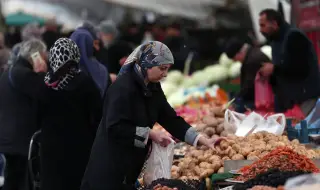
Rising inflation in Turkey is making traditional Ramadan foods more expensive by about 35 percent annually, deepening the cost of living crisis on the eve of the holy month, DPA reports, BTA reported.
With the first iftar (evening meal when Muslims break their daily fast during Ramadan – ed. note), scheduled for today, financial strain is changing one of the symbols of the holiday, the agency notes. The Ramadan basket of flour, oil, legumes, dates and tea is both a means of charity and an indicator of food price dynamics.
The hardest hit are pensioners and minimum wage earners, whose incomes are already well below the poverty line of 31,224 liras (around 605 euros). The estimate is from the "Turk-Iş" trade union and reflects the minimum monthly cost of food for a family of four.
At a market in the Uskudar district of Istanbul, pensioner Şahin Tutar told DPA that even a basic set of breakfast products and fruit exceeds 1,000 liras (around 20 euros).
"We will set our iftar table modestly this year too," he said.
While global food inflation has cooled to single digits, Turkey remains an exception, DPA notes. According to data from the Organization for Economic Cooperation and Development, annual food inflation reached 28.3 percent in December 2025 - nearly eight times the OECD average of 3.8 percent.
Economist Murat Sagman warns that without structural reforms, the erosion of purchasing power will continue, and food and housing prices disproportionately affect the poor.
The crisis is testing the rule of President Recep Tayyip Erdogan, DPA notes. Although Erdogan has promised future easing, some observers interpret his rhetoric as a potential U-turn from the current tight fiscal policies towards increased public spending before elections scheduled for 2028.
The central bank forecasts inflation between 15 and 21 percent by the end of the year, while Finance Minister Mehmet Simsek is targeting a level below 20 percent by the end of 2026. Official annual inflation in January was 30.6 percent, and market skepticism remains high.
Independent analysts predict year-end inflation will settle in the range of 23-25 percent, leaving many Turkish families wondering when or if the "modest" Ramadan tables will ever return to abundance, DPA summarizes.