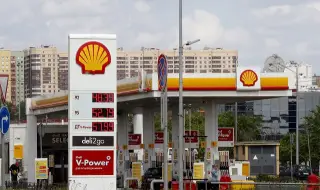
The war in Iran and the destruction of the oil infrastructure in the Gulf countries have increased concerns on the international market about the supply of petroleum products and natural gas, which has led to a sharp increase in prices. The situation has inevitably put pressure on the countries of the Balkans - highly dependent on imported energy resources. To deal with the situation, governments in the region have begun to take various measures, including temporarily limiting prices and reducing taxes and excise duties on fuels.
Some are considering resorting to using strategic reserves, and those among them that are members of the EU must notify the International Energy Agency (IEA) by 19:00 Bulgarian time today whether they plan to release quantities of their oil reserves, a European Commission spokesman said today. He indicated that the Union is ready to take measures if necessary and explained that each EU country independently assesses how to use its oil reserves.
At a briefing at the Council of Ministers today, Prime Minister Andrey Gyurov announced that the caretaker government will support households and businesses due to the increase in fuel prices, and the measures will be targeted. He explained that direct aid will be offered to households and citizens who will have problems with increased fuel prices, based on certain income criteria and depending on oil prices on world markets.
We are trying with such a measure not to influence the mechanisms of the market, which would lead to uncertainty in the fuel market, he said and added that for this reason the measures are aimed in two directions - at the most vulnerable in society and at business, where measures will also be proposed to relieve companies involved in the supply of food products.
And here are the policies that other Balkan countries are choosing to follow to mitigate the effect of the increase in oil prices:
Greece
The Greek government is applying limits on commercial profits for fuels, food and basic necessities, in order to limit speculative price increases. According to the limits announced on March 11, the profit margin for wholesale petroleum products cannot exceed 5 eurocents per liter above the price at which fuels are purchased from refineries. For gas stations, a maximum margin of 12 eurocents per liter has been set for the sale of A95 gasoline and diesel fuel to end consumers.
A similar limit is also in force for profits on food and basic consumer goods. According to the new regulation, no product can be sold with a higher gross profit margin than the average margin that was applied to the same product in 2025.
In case of a violation, administrative sanctions of up to 5 million euros are foreseen, depending on the size of the enterprise and the number of products for which an excessive profit increase was established.
Turkey
A special system for regulating fuel prices, called the buffer price system, was introduced in Turkey on the night between March 4 and 5. Thanks to this measure, when fuel prices rise internationally, the Turkish authorities have the right to reduce the special excise duty on fuels by up to 75 percent of the value of the increase. Thus, the increase in fuel prices for end users remains significantly lower than the actual one.
Croatia
At an extraordinary meeting on March 9, the Croatian government reintroduced regulation of the maximum retail price of fuels, with the regulated prices in effect from March 10 to March 23 and during their period, it is expected to reduce state budget revenues from excise duties on energy products by EUR 1.95 million. The Croatian government regulated fuel prices for three years – from 2022 to July 2025 to ease the price pressure on citizens and the economy caused by rising prices due to the war in Ukraine.
According to the new fuel prices at gas stations announced by Prime Minister Andrej Plenković, the price of Eurodiesel will be increased by only seven cents and will be 1.55 euros per liter, while the price of Eurosuper gasoline will be 1.50 euros per liter.
Serbia
Fuel prices in Serbia have been controlled by the state for years, and most recently on January 24 this year, the government extended the Regulation on Limiting Prices of Petroleum Derivatives by 60 days. The regulation states that the highest retail price, including VAT, is set for Eurodiesel and BMB 95 gasoline based on the average wholesale price of these products in Serbia, increased by 20 dinars (0.17 euros) per liter.
Serbian President Aleksandar Vučić said on March 6 that the state is preparing new legal solutions to intervene to protect the population from sharp increases in fuel prices. The measures will aim to reduce excise duties and limit the price shock for citizens, Vucic said, adding that the law allows for a reduction in excise duties by up to a maximum of 20 percent.
Montenegro
Montenegrin Prime Minister Milojko Spajic said earlier this week that the country already has strategic reserves of petroleum products, which, together with the reserves of some companies, can ensure stable supply and normal fuel consumption for about two months. On Thursday, the country's Ministry of Energy and Mining announced that Montenegro has 40 percent of the legally required reserves of petroleum products, or 44,260 metric tons, consisting of unleaded gasoline and Eurodiesel, and that claims by analysts and some media outlets that it does not have them are completely false.
„These reserves have been established since September last year and represent 40 percent of the total legal requirement, according to the Law on Security of Supply of Petroleum Products. The total obligation is 112,340 metric tons, which corresponds to 90 days of net imports, in accordance with European standards,“ the Montenegrin ministry said.
Bosnia and Herzegovina
The government of the Federation of Bosnia and Herzegovina, one of the two constituent parts of Bosnia and Herzegovina, announced that it plans to support an initiative to temporarily reduce excise duties on fuel in order to alleviate pressure on citizens and the market against the backdrop of rising oil prices and unstable international conditions. According to the Prime Minister of the Federation, Nermin Nikšić, the government is ready to shoulder some of the financial burden by forgoing part of its revenues to help distributors and limit price pressure on consumers. It has not yet been decided whether the excise duty reduction will be by 10 or 20 percent. However, to be approved at the national level, such a measure requires the consent of the Council of Ministers of Bosnia and Herzegovina, and it is not known whether the other constituent part of the state - Republika Srpska - will support it.
Romania
Romania's Energy Minister Bogdan Ivan indicated that the ruling coalition is discussing several scenarios in connection with the increase in fuel prices, which is the largest in recent decades. According to the minister, the authorities are ready to restart the Petrotel-Lukoil refinery, whose operations were frozen due to sanctions against the Russian Federation, to which, although unofficially at the moment, US representatives have agreed.
North Macedonia
North Macedonia's Prime Minister Hristijan Mickoski said this weekend that the country has enough oil and oil derivatives, so citizens should be calm, announcing that the government will intervene immediately if there is a dramatic jump in prices. Mickoski said that he had a meeting with large distributors of oil and oil derivatives and their general conclusion was that there is enough oil and oil derivatives. He also told MIA that citizens should be calm because prices in the country are "drastically lower than those in the neighborhood".
Albania
In order to limit the negative effect of the sharp increase in fuel prices, the Albanian Ministry of Finance has created a special working group yesterday that will control the hydrocarbon market in order to prevent abuse and speculation, reports the Albanian information portal "Schiptar". The main task of the so-called Working Group on Customs and Taxation will be to control both the prices and the quantities of hydrocarbons traded in the country at retail and wholesale. The group's activities and the inspections it carries out will cover the entire territory of the country, and its work is expected to continue until June 30, 2026.
Kosovo
Amid rising fuel prices on the world market, on March 4, Kosovo's Minister of Industry, Entrepreneurship and Trade Mia Kusari-Lila announced a decision imposing a temporary ceiling on the maximum allowable markup for fuels traded on the Kosovo market, the Kosovo newspaper “Gazeta Express“ reported. According to the temporary measure, the maximum markup per liter of fuel for wholesale is 0.02 euros, and for retail - 0.12 euros.
Due to rising fuel prices on world markets, the Kosovo General Inspectorate for Market Supervision announced on Tuesday that it has started additional inspections and is closely monitoring the situation on the oil derivatives market, “Gazeta Express“ also noted. The Inspectorate also states that compliance with the imposed ceiling on the surcharge is strictly monitored.
Slovenia
At the beginning of March, the Slovenian government took measures to address the sharp increase in fuel prices on European and global markets. The government reduced excise duties on gasoline, diesel and heating oil, it was announced on the Slovenian government website gov.si.
In practice, the measures introduced by the Slovenian government suggest that when filling up 50 liters of gasoline, Slovenians will save about 5.50 euros. When filling up 50 liters of diesel, they save about 8.70 euros. If they buy 1,000 liters of heating oil, they can save 183 euros.
The measure will remain in force until March 23, 2026 - one day after the parliamentary elections in the country. Local media commented that the measure may actually be a pre-election move and may not be continued after the elections.
Republic of Cyprus
The government of the Republic of Cyprus is ready to take measures if it is established that there is an unjustified increase in fuel prices or a fuel shortage occurs. The authorities in Nicosia are monitoring the fuel supply chain in the country, the relevant energy ministry announced. For the time being, no specific steps that the government will follow have been announced, specifying that such steps have been identified.