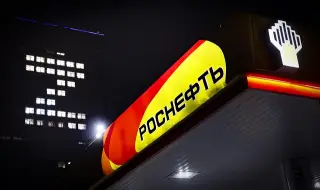
The US has lifted sanctions on Russian oil, which is already on tankers at sea, until April 11, 2026. This is a decision that will support the Russian military economy. Moscow has already earned up to $1.9 billion since the beginning of the crisis in the Strait of Hormuz.
The crisis with Iran reduces the chances of finding a diplomatic solution to Russia's war with Ukraine.
These are the main conclusions of the daily analysis of the Institute for the Study of War (ISW).
The US Office of Foreign Assets Control (OFAC) announced on March 12 that it is temporarily authorizing the supply and sale of crude oil and other petroleum products transported by ships of Russian origin in violation of sanctions, from March 12 to April 11.
US Treasury Secretary Scott Besant said that the US is temporarily authorizing a "narrowly targeted, short-term measure" that will allow countries to purchase Russian oil "currently blocked at sea", in order to promote the stability of global energy markets. markets.
The US decision to lift sanctions, albeit temporarily, will allow Russia to receive much-needed revenue that will strengthen Russia's vulnerable military economy.
The increased price of oil and the US decision to ease sanctions against Russia will provide Russia with greater flexibility and support Russia's domestic economy, the formation of the Russian armed forces and the Russian military-industrial complex (MIC). The "Financial Times" (FT) newspaper reported on March 12 that Russia is earning up to $150 million a day in additional budget revenue from oil sales.
The FT reported that Russia has already earned an estimated $1.3 billion to $1.9 billion in taxes on oil exports since the effective closure of the Strait of Hormuz.
The "Financial Times" estimated that by the end of March 2026, Russia could earn an additional $3.3 billion to $4.9 billion if prices for Russian Urals crude oil average $70 to $80 per barrel, instead of the level of the past two months - around $52 per barrel.
The International Energy Agency reported that Russian crude oil and petroleum product exports fell to their lowest level since February 2026 - just before the start of the conflict with Iran - and since the invasion of Ukraine began in 2022.
"Reuters" reported on March 12 that it estimated that Russia's crude oil production tax could generate about 590 billion rubles ($7.43 billion) if prices remain near current levels, up from 314 billion rubles ($3.9 billion) in January 2026 and an expected 300 billion rubles ($3.7 billion) in February 2026.
Ukrainian President Volodymyr Zelensky said on March 13 that the U.S. decision to partially ease sanctions on Russian oil could allow Russia to earn about $10 billion over an unspecified period of time.
ISW's previous forecasts that rising economic costs would force the Kremlin to make tough decisions in 2026 and 2027 were based on the assumption that Russia's economic downturn would continue.
The global oil price shock triggered by the war in Iran, has probably refuted some elements of these assumptions. The US decision to ease oil sanctions on Russia could bring financial benefits to Russia by reversing months of decline in Russian oil revenues and allowing Russia to continue to finance its war in Ukraine in the medium term.
ISW has previously assessed that deteriorating economic conditions have led the Russian government to adopt politically unpopular and economically suboptimal measures, such as increasing the value-added tax (VAT) and lowering the key interest rate despite high inflation in Russia.
ISW has previously assessed that Russia faces problems in building up its armed forces, mainly due to budgetary constraints, including Russia's inability to pay prohibitively expensive one-time enlistment bonuses.
These previous ISW assessments included the assumption that Russian oil would remain under sanctions and that the price of oil would remain stable.
The US decision to temporarily ease sanctions and the global oil price shock oil partially refute these assumptions in the short and probably medium term.
Russia is struggling to amass the forces, equipment and domestic support needed to continue the war, but the increased cash flow could allow Russia to strengthen its capabilities.
ISW's previous forecasts could also be justified, albeit with some delay, if oil prices normalize and Russia's oil revenues return to their February 2026 levels in the medium term.