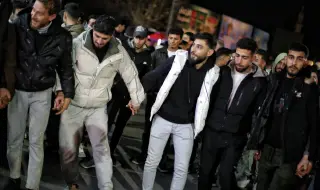
The authorities in Damascus have banned the sale of alcohol in most of the city. Bars and restaurants that have served alcohol for decades will no longer be able to do so, and alcohol will only be available for purchase in a few predominantly Christian neighborhoods - and then only for take-out.
This is not all that unusual in the Middle East - Islam is known to forbid Muslims from consuming “intoxicating” substances. That is why liquor stores and bars, if any, are often found only in Christian neighborhoods.
However, the ban is unusual for Damascus. The Syrian capital has long had rules on the sale of alcohol, but they were not fully enforced because the authoritarian family of former President Bashar al-Assad, who will rule until the end of 2024, prioritized nationalism and a secular state over religion. That is why the alcohol ban in Damascus is causing so much controversy among Syrians.
“The news was both surprising and worrying“, says Angela Alsawi, a media producer. “Damascus is a city with history, and diversity is its true identity. This decision makes us feel like we are losing part of the open spirit of the city. This is not just about alcohol, it is about the freedom to have a choice“, she told DW.
Religious bans
There are other arguments against the ban. Syria's economy is in dire straits, and the closure of bars and restaurants will mean hundreds of jobs will be lost. Tourism is also important, and critics say the ban could deter foreign visitors. The fact that sales are limited to Christian areas is also seen as a problem, others say: "Discrimination against Christian-majority areas is wrong. By linking alcohol consumption to a violation of public morality, you are essentially stigmatizing some of your own citizens as indecent. It is disgraceful," said Roba Hanna, who recently returned to Syria.
The authorities in Damascus explained that the ban was imposed because people complained. But the bars in question have been operating for decades, Angela Alsawi recalls. Of course, there are also many Syrians who support the ban. "We are a Muslim-majority country," one local resident wrote on social media. “It is not appropriate to sell alcohol on the streets. This decision protects our children and their future.“
Some Syrians also believe that the ban helps protect their own culture from “corrupting“ Western influences. There are also those who believe that the whole debate is completely irrelevant in the current difficult post-war times that Syria is going through: “Participating in debates about alcohol only shows that you have lost touch with reality,“ says Mahmoud al-Khattab, a jeweler in Aleppo.
And other reasons for concern
But there are actually other reasons for concern related to the alcohol ban: “The debate about alcohol [...] is not just about one drink or a way of life. “It touches on deeper issues of governance, societal values, and the balance between religious and secular ideologies,” Ammar Abdulhamid, a Syrian democracy activist living in exile in the United States, wrote in the magazine Newlines.
The alcohol debate also touches on a debate about public morality. Last summer, the Syrian government issued a recommendation that men and women should wear modest swimwear on public beaches and swimming pools. In January, a municipality in southwestern Syria announced that local restaurants would no longer accept mixed groups of men and women. And the city authorities in Al-Tal, near Damascus, banned men from working in women’s clothing stores – again in the interests of “public morality.”
In February, local authorities in Latakia banned female civil servants from wearing makeup in the workplace. "In the context of a series of such measures, the ban is a worrying sign of a growing trend of interference in privacy," wrote Haid Haid, a consultant at the British think tank Chatham House.
Most of these controversial decisions are made at the municipal level, although the national government has promised to respect personal freedoms. "There needs to be clarity about the powers of the governor so that citizens know their rights. We are not against regulation. But an adult Syrian citizen does not need guardians," commented Roba Khanna on this occasion.
Promises of personal freedom
In late 2024, Prime Minister Ahmed al-Sharaa told the BBC that Syria would not become Afghanistan. He said his government would not impose Islamic law on minorities, but declined to say whether alcohol would be banned. Some Syrians therefore worry that the alcohol ban is a sign of even stricter restrictions to come. Critics of the alcohol ban imposed by Damascus hope that it can still be lifted. There have even been calls for the governor to resign.
Author: Catherine Scheer